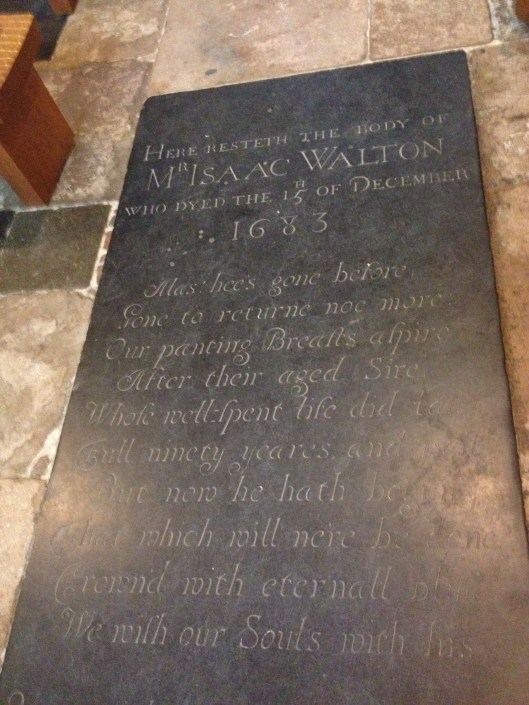
At rest in Winchester Cathedral
Posted by Tony Mair | Filed under Uncategorized
11 Friday Apr 2014
18 Thursday Jul 2013
Posted in Cheshire
Tags
Bate Mill, Bay Malton AC, Chess, Chris Lees Jones, Dane, Dunham Massey AC, Eaton Fly Fishers, Ebble, Golin, Gowy, J W Lees, Lymm AC, Middlewich Anglers, Nigel Rogers, Paul Jennings, Peover Eye, Prince Albert AC
Why did I think that Cheshire was going to be easy?
I remember attending a conference in Macclesfield years ago, and thinking then that my road trip passed through what looked like, trouty terrain, and the Pennines are close so, too…but trout streams are few in reality.
Several angling clubs claim that in their waters trout can be found alongside fit barbel, and impressively chump chub, and my early enquiries elicited a response from Nigel Rogers, a real gem of a fellow
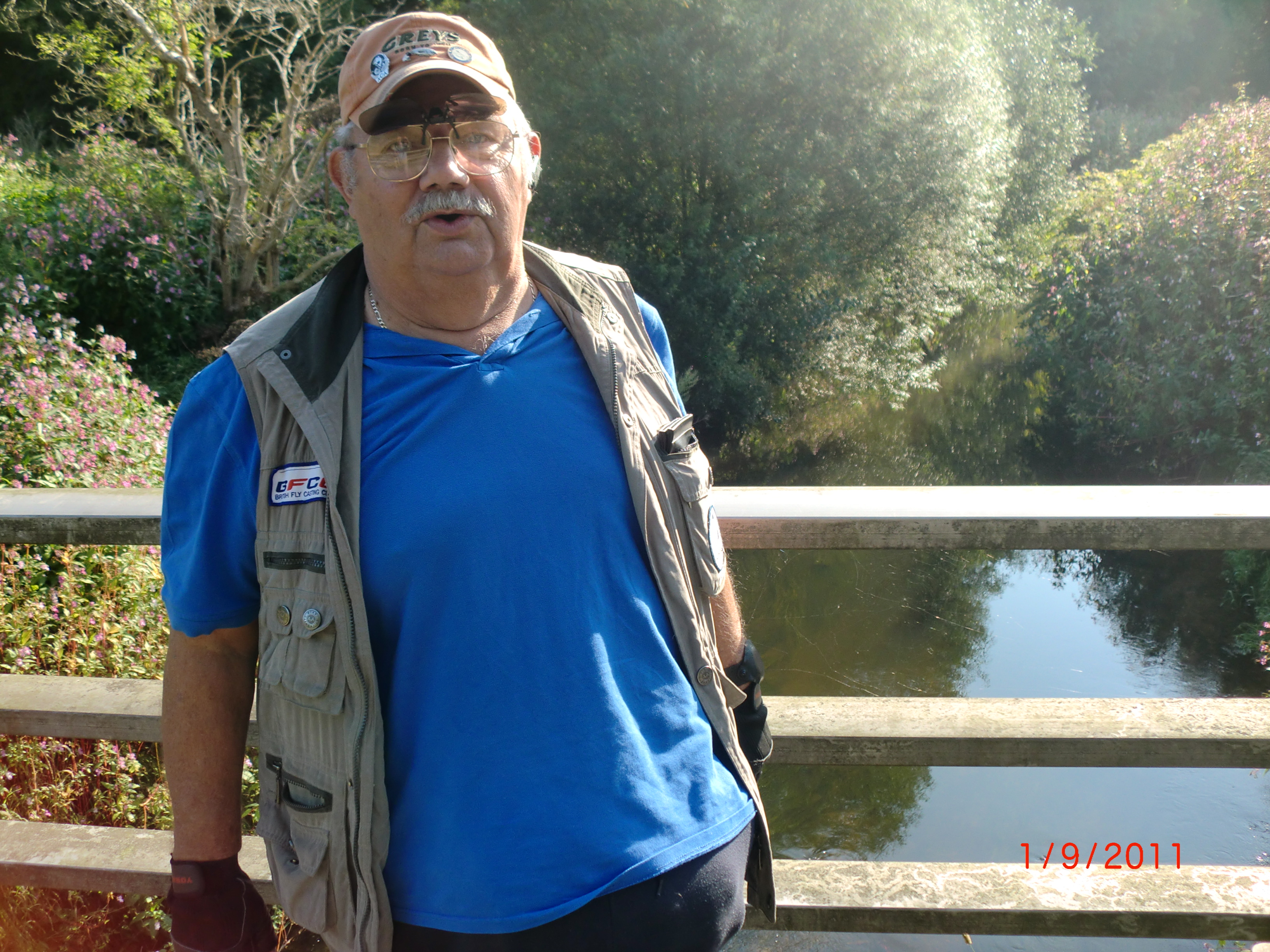
and then Chairman at Bay Malton AC, who confirmed that his Committee supported and endorsed his own enthusiasm for my task and a date was set for us to meet, for his club was one where what I sought might be found.
As it happened, we arranged to meet on the day following my success on the Goyt when I ‘netted’ Greater Manchester, so my confidence was high!
Our meeting place close by the Bolin, near Manchester Airport, probably was not in Cheshire, so it was on to Congleton, most definitely in it, and to another BMAC beat.
A couple of hours on the Dane there delivered two salmonids,
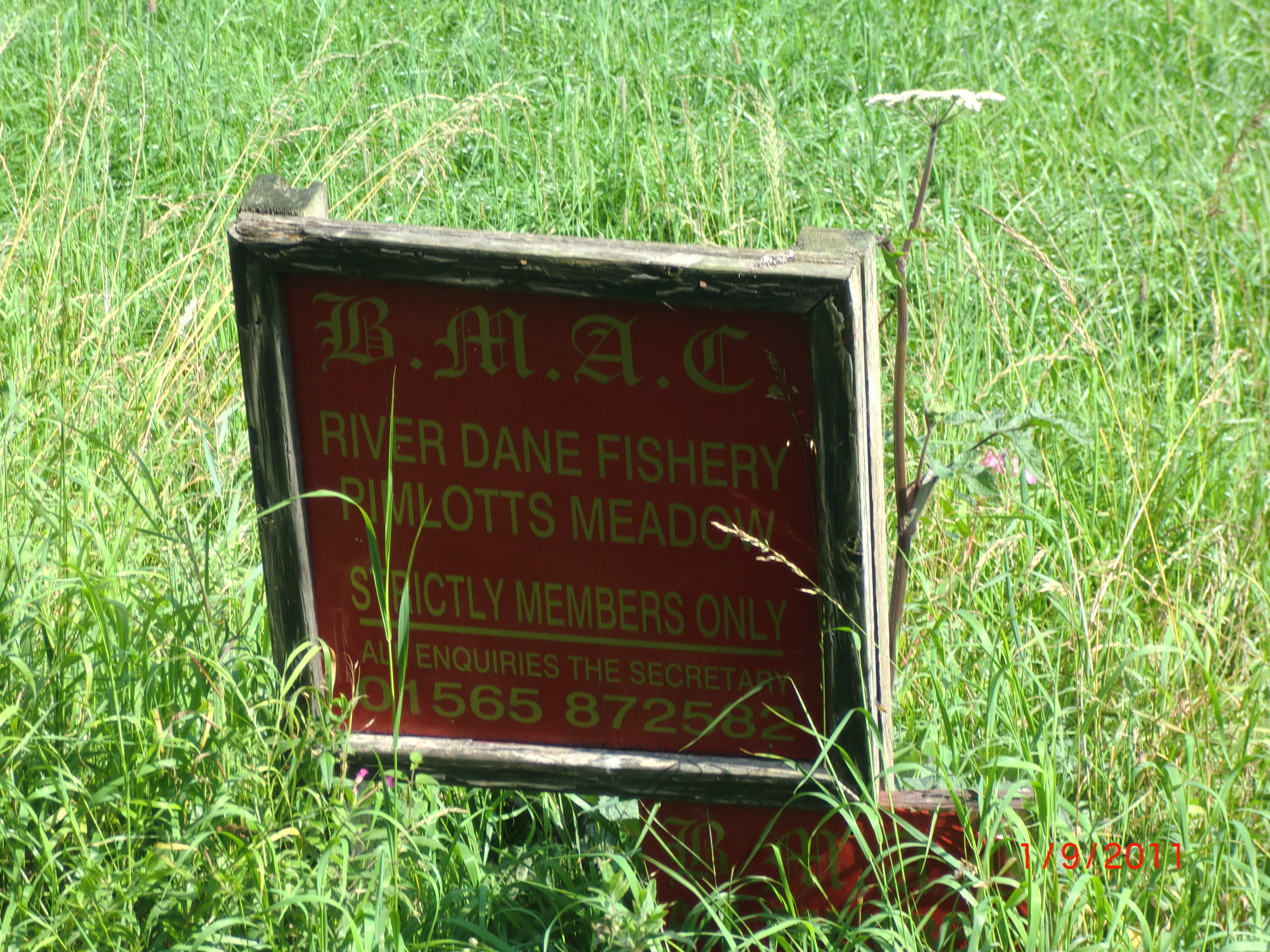
but genus thymalus thymalus, which could not count! So where next?
I took another look at the Clubs’ listing I had identified which included Eaton Fly Fishers, Middlewich Anglers, Dunham Massey AC, and the renowned Prince Albert AC, and all responded with helpful advice, but it was the Lymm AC which seemed to offer the best chance of what I sought, and they were taking new members! I joined!!
Recce-ing waters is never easy/convenient from a home 200 miles away, and my first visit to my new Club’s waters followed the rains which punctuated the early weeks and months of season 2012,
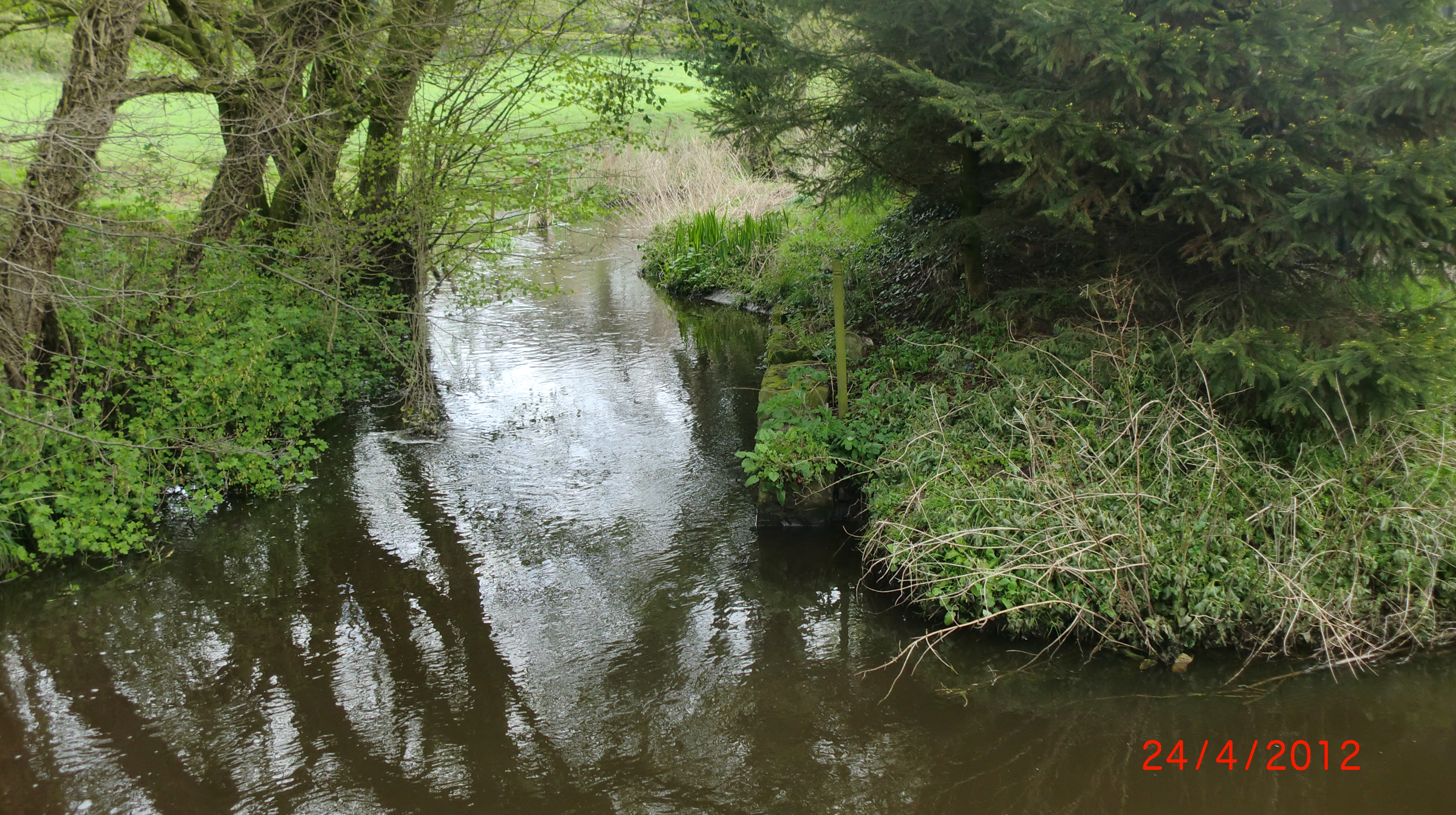
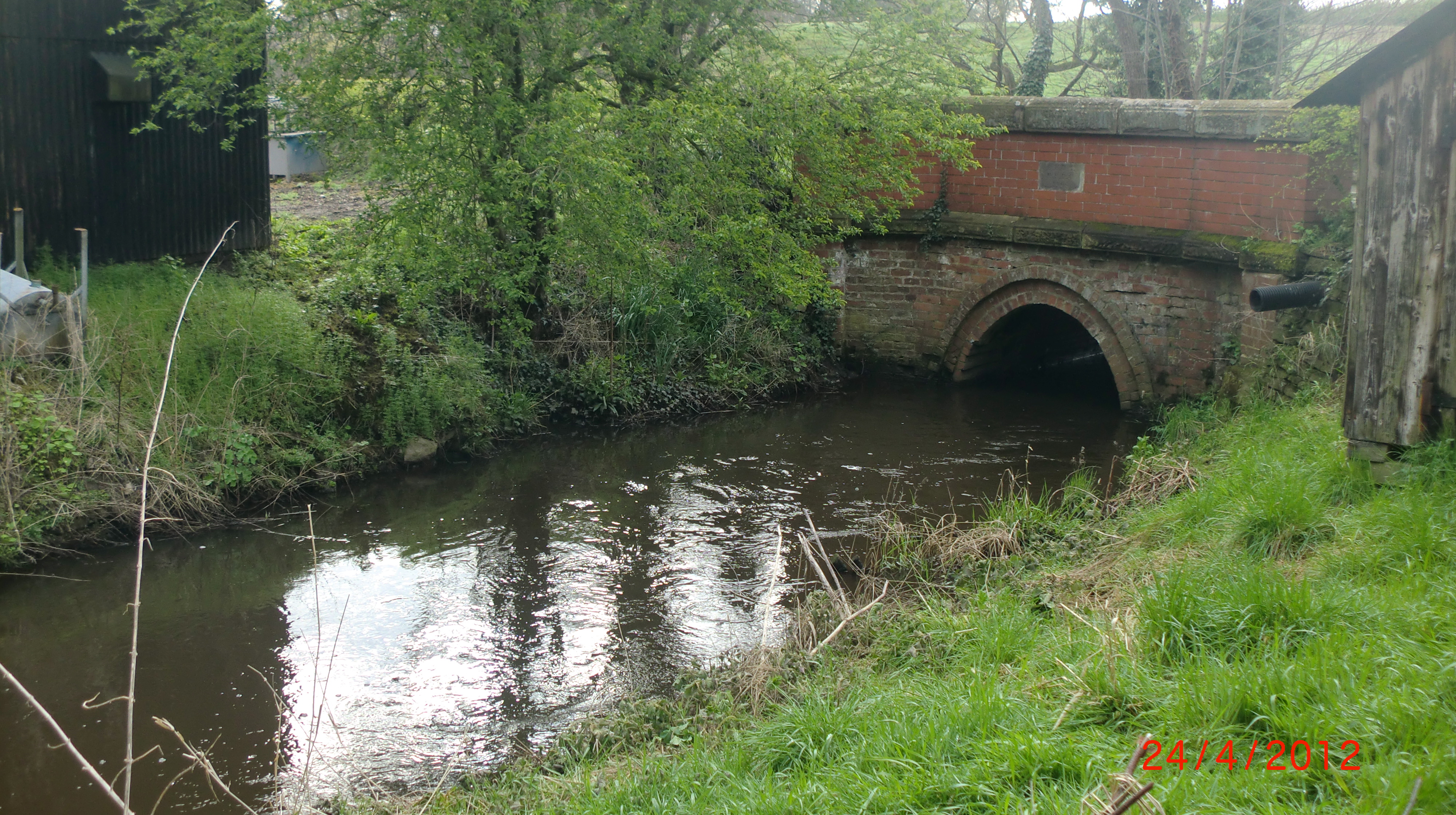
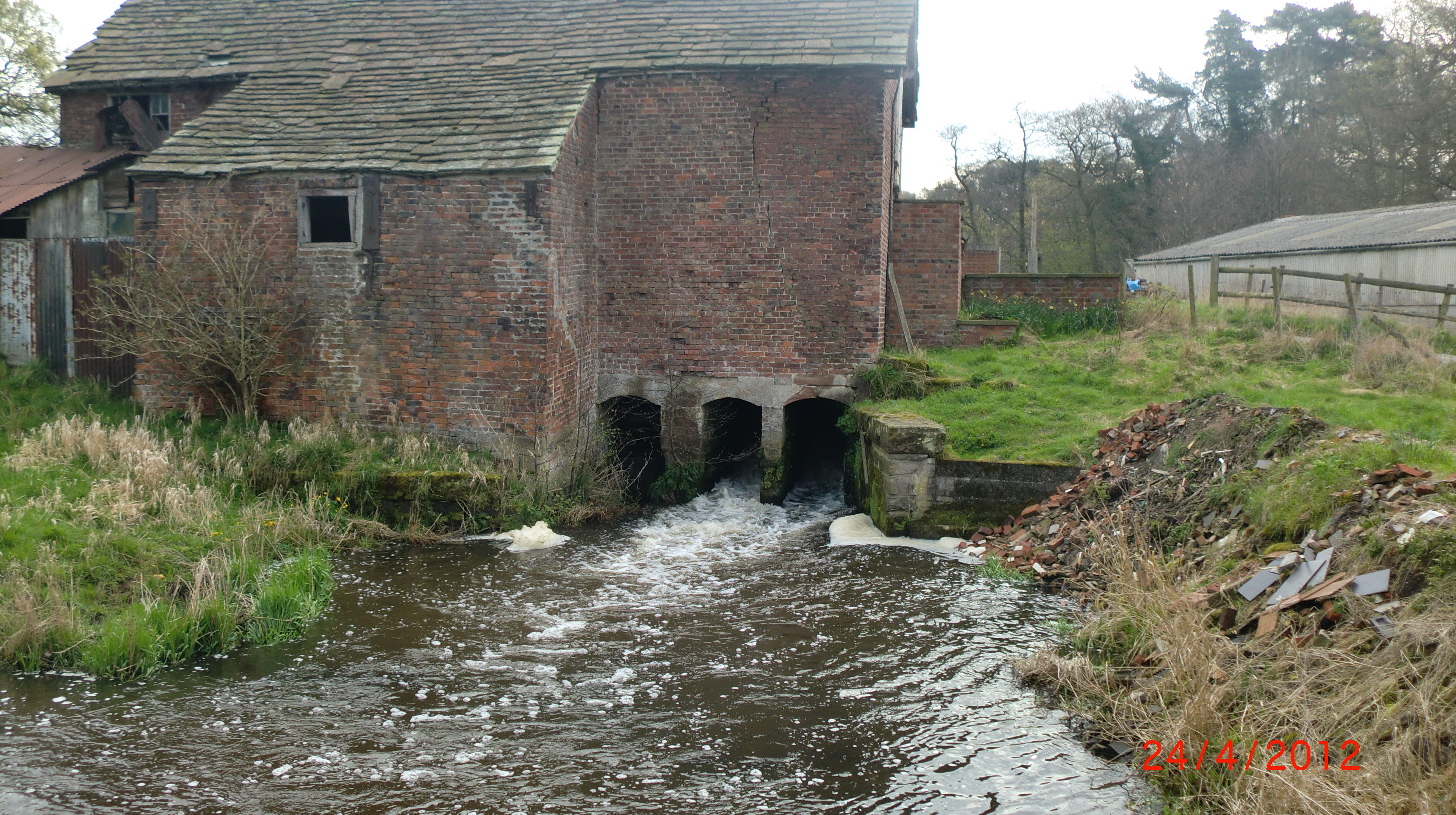
and not a cast was made on that visit, nor was another possible in that year.
This year (2013), the early season was cold, very cold and fishing was pointless when Nature still slept. Then, just a couple of weeks ago, the Jet Stream, finally moved North, of the British Isles, from its seemingly permanent residence over Central France. We have now what we have yearned for, for seven years…a Summer!
I observe that the trout streams of the south have more ranunculus than I remember. The Wylye is full of it, the Ebble is trickier because of it, and Paul (Jennings) tells me that in his stretch of the Chess it is strangling the fishing! The weed is keeping water levels high, aquifers being totally full, and even early weed cuts are having marginal effect. This is a challenging year.
In the Midlands (Cheshire, at least) streams, where weed is scarce, levels now are low. Today (July 15), I ventured to the Gowy near Chester, and the Dane in Congleton, but did not cast a line. In fairness, parking Tonka in Congleton at the prescribed place, travellers had taken up residence, which made my staying there less likely, for some reason. And so it was to –
July 2013 – the Peover Eye
This Lymm AC stretch at Bate Mill is close to the magnificent Jodrell Bank,
 and its massive telescopes. I visited it last year, and saw a fish rise in a side stream, but there is also a mill pool there and I convinced myself that this not only held trout but there was one with my name on it. Whilst the spate made fishing then, a little pointless, I made a few casts with weighted nymphs in idle hope. But this still felt like the place where success was most likely, a thought endorsed by chum, fellow Brewer, and salmon mad, Chris Lees-Jones of J W Lees, and also because of the optimistic description of water by Lymm AC – “(the river) is located in an area of such beauty it needs to be seen to be believed. The river abounds with trout, both resident browns and escapee rainbows….”
The Peover Eye is a lovely and fascinating name. It seems to be the combination of the word Peover, which comes from the Welsh word for ‘dart(ing)’ or ‘sparkling’; and the Anglo Saxon, Eye, meaning small stream. It rises near Siddington and flows for some four miles and joins the Smokers Brook above Lostock Gralam, to form the Wincham Brook.
This day, I arrived post Gowy and Dane at one-ish. The sun was high. It was unbelievably hot, but I could not resist a couple of casts. Then off to my hotel to rest up after too many hours driving, from London.
Returning to the river at seven in the early evening, I spoke to Sue en route, and suggested that my mission might be coming to an end. Merseyside seems impossible, Bedford, much the same, and Cheshire…well just how many more times should I bother tripping up the M6?
I had a look, but did nothing. The waders stayed bagged. The boots delightfully dry. I had already checked out some fishing in a real trout county (Derbyshire) for tomorrow, in scant consolation for the disaster which is Cheshire.
Oh well! Then I saw what looked like an angler upstream of the disintegrating mill, and walked up to chat to him. “I am looking for trout”, I opened. “This is club water” he responded. “I am a member” I replied. We were connected!!
The water above the old mill is stuffed with trout, and a members’ return chit of just a few days prior, revealed five rainbows in a couple of hours in June. My new friend showed me a picture of a handsome rainbow taken by his friend shortly after their arrival just before mine. And he himself, had had a memorable visit with a net full of trout from this slow moving stretch earlier this year. So there are trout here! That he is a coarse fishing specialist made my interest in catching on the fly more intriguing to him. That his pal had a 2-lber minutes before I arrived, was intriguing to me. The high water and early Spring flows may have flushed some fish below the mill, he suggested. My head said that if these were rainbows, then a 7x tipped was a risk, as was a short rod less likely to cope with a warrior rainbow. But I was enthused, and got kitted up, accordingly.
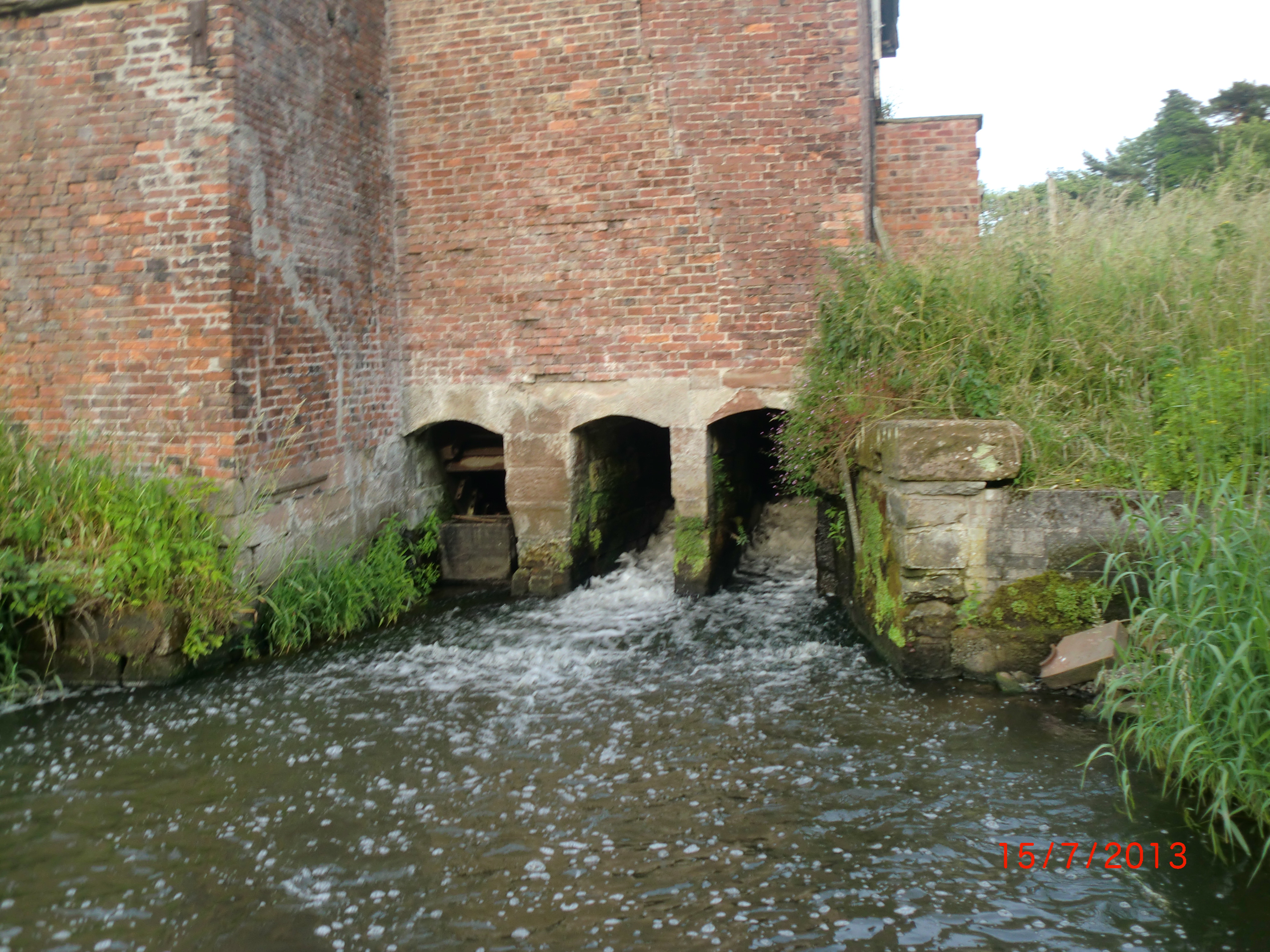 Down in the water, my first offering was a brown elk hair caddis #14, below which, NZ style was a #20 bead head nymph. The first cast produced a swirl, but to which I had no idea, but Boy, was I motivated? And then two more splashy swirls to what was hatching, and I was in determined mode.
Off came the nymph. Away the feeble tippet. Spotting a solitary May, with a white body and black thorax, in flight, it was on with a bushy caddis….the second cast with this offering delivered me my Cheshire trout, a 2-lb wild brown.
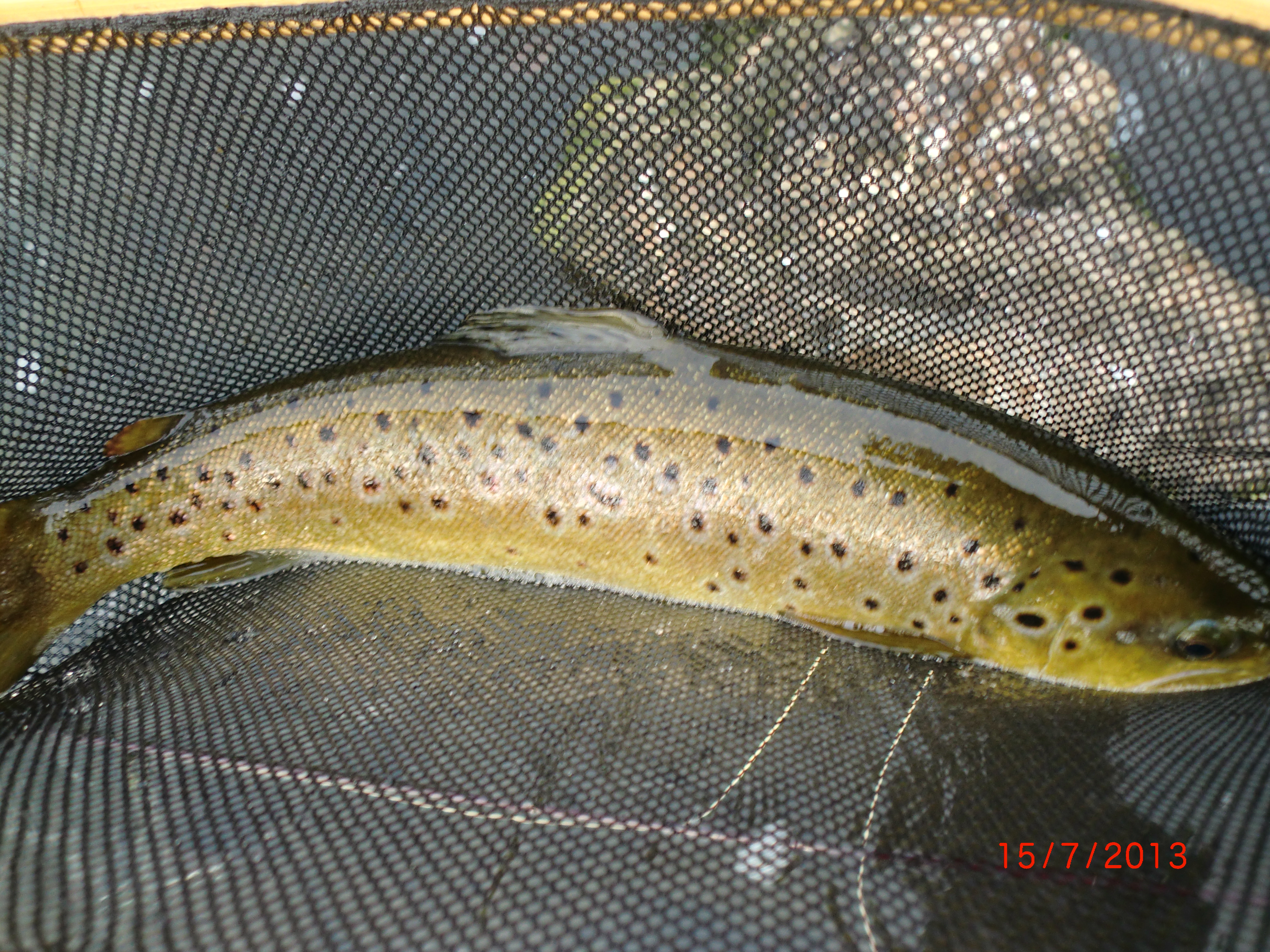 A few casts later, a fish, another brown, took a good hard look, and then yet another was mine!
Paul and Jack, and Phil
I am indebted to Paul, who was fishing and tutoring son, Jack, and to Paul’s pal, Phil, who pulls trout from the Peover Eye, with ease.
My kit worked worked for me when it mattered. Their’s did, too, and in spades!
Cheers, Guys…have a great season, and let me know if your methods out fish mine below the mill. I suspect they will!
Thank you, Lymm AC…mission accomplished.
22 Saturday Jun 2013
Posted in Staffordshire
Tags
Andrew Heath, Charles Cotton Hotel, David Thompson, Derby County AC, Manifold, Peak Passport scheme
Mareka’s dinner of Norfolk hake was delicious(lightly steamed over a bed of sliced red peppers and onions) as was David’s generous offering of an aged Cote Rotie, and a good night’s sleep in anticipation of a rare sunny day’s fishing was set. The drive from their home took us through territory which was new to me, through the Staffordshire towns of Stone and Blythe Bridge, and into the Peak District, surely one of Britain’s treasured spaces, and especially on such a beautiful day as on ours.
And onwards to the village of Hartington, home to the Charles Cotton Hotel
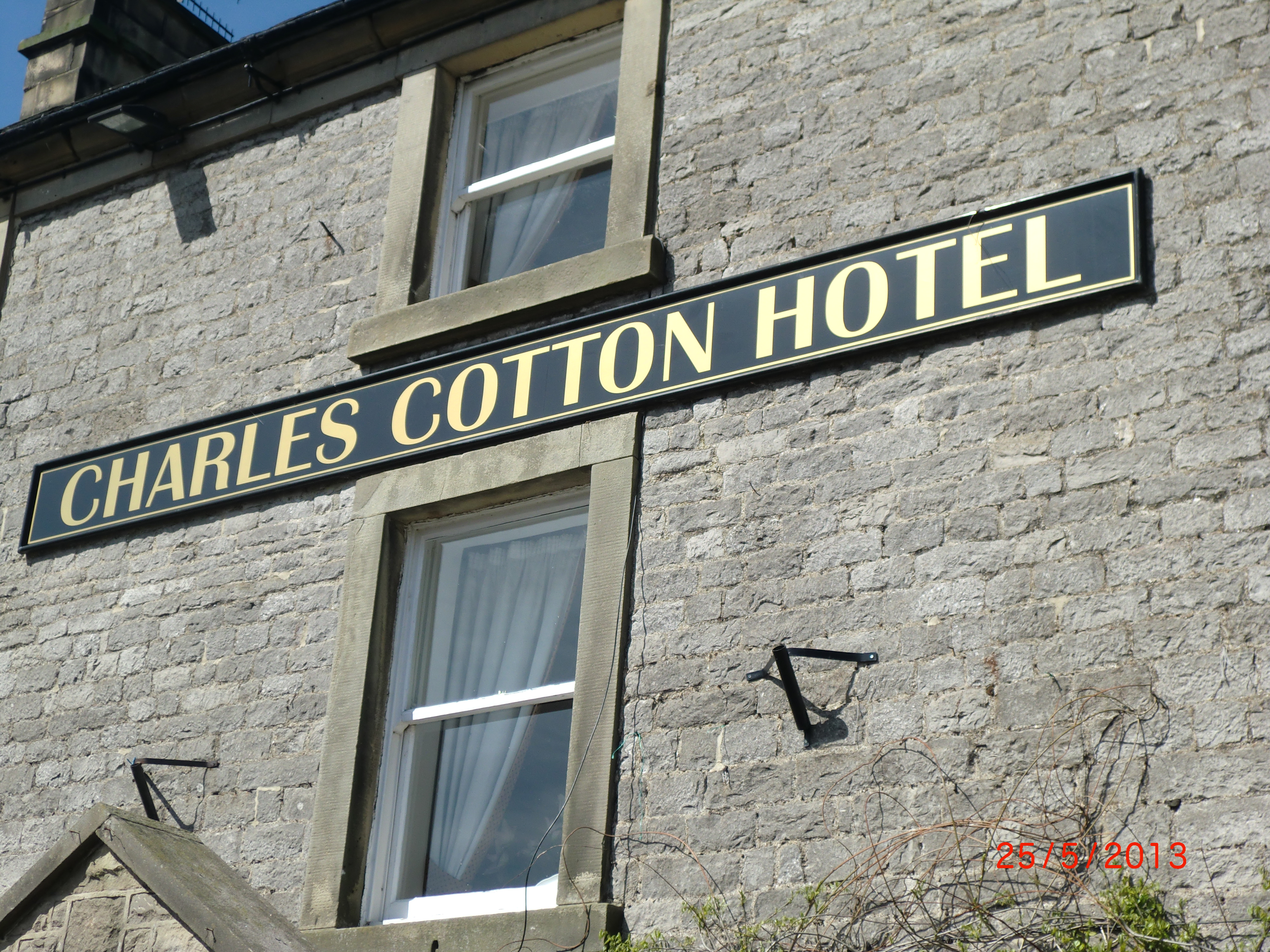
which is where we were to meet our host for the day, Andrew Heath.
The Manifold – a WTT Auction Lot, 2013
This was a day when I was able to repay David’s invitations to me to fish his syndicate waters, and the Manifold was a river new to us both, and what a glorious little stream it turned out to be,
 running clear after recent rains at its 800ft elevation, where weed life is scarce, and protective rocks and boulders rare, in an environment where winter rains and their spates produce waters where food is limited, and those fish which survive grow slowly in cold water.
Even now, weed was absent, fly life was feeble, and as hungry as they may have been, such feeding was deep down, probably on caddis larva, so as much I wanted to ‘go dry’ the chances of a catch were unlikely. But hungry wild trout rarely turn down a tasty morsel, and before lunch two came to an elk hair caddis.
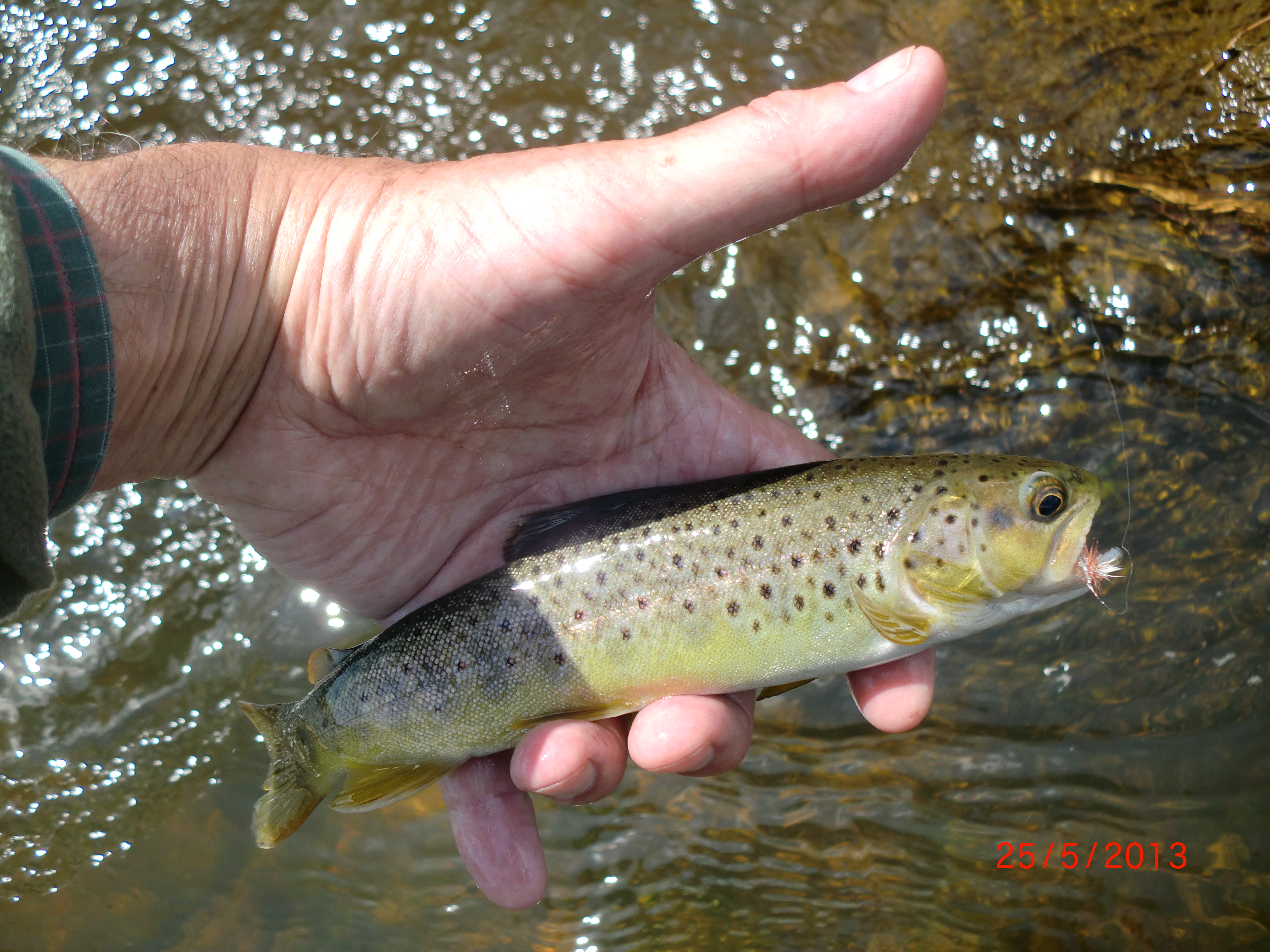

And the two which came to me after our tasty lunch did so, to trailing weighted caddis nymphs.

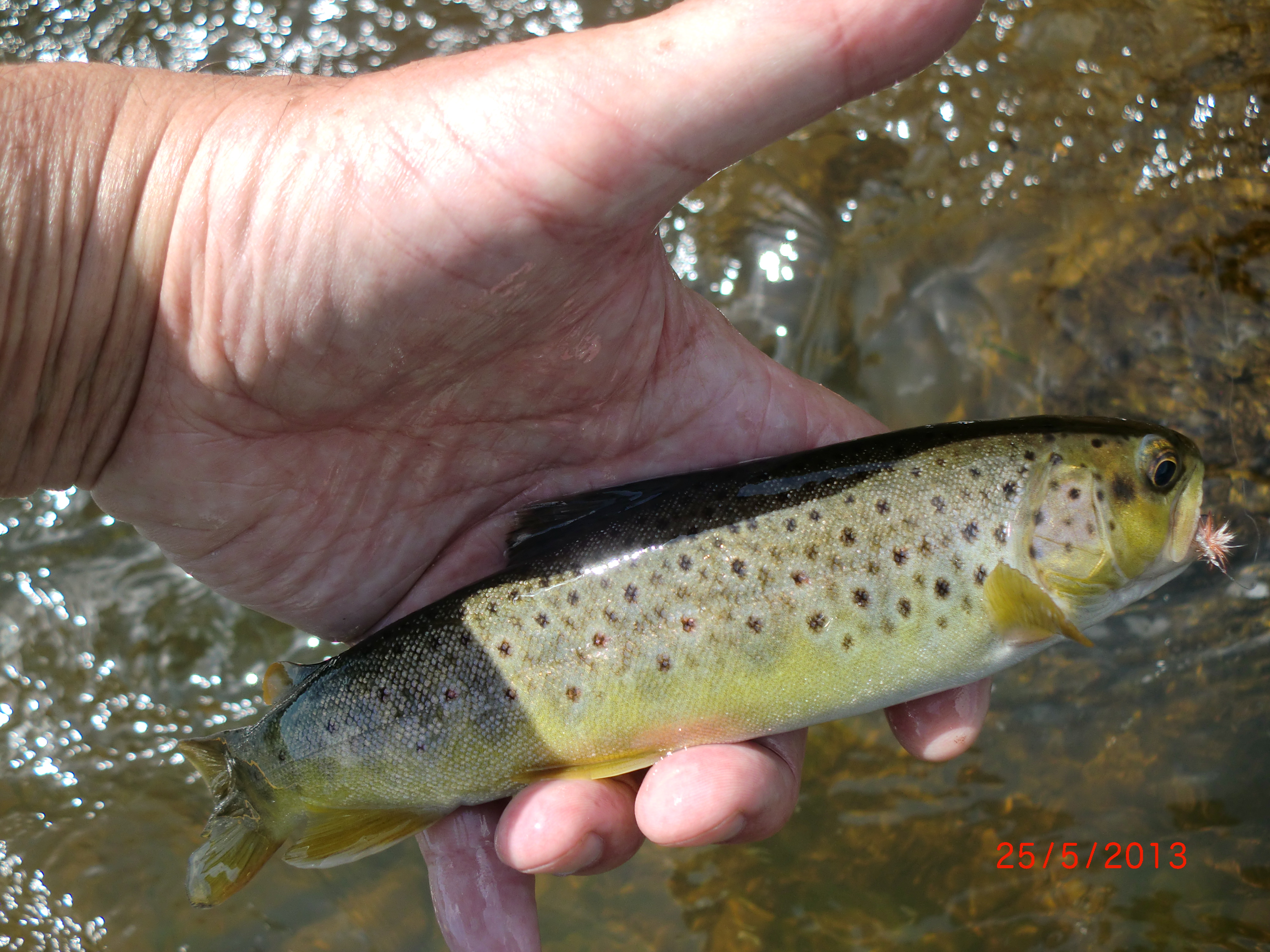
DT persevered for another four fish, and all his from difficult sub arboreal lies which would challenge the most gifted caster, were on fluffy dries! A Champion!!
We all know just how late this Spring has been and Andrew would have wished that we had seen his beat behaving and fishing more easily than it did. But on this beautiful day, which brought out striding ski-poled ramblers and dog walkers, and hang gliders aerial surfing the peaks nearby, it was the joy of being there which made the day.
This beat, which is leased to the Derby County Angling Club is on the Peak Passport scheme, and should be visited.
01 Monday Oct 2012
Posted in Northumberland
Tags
Breamish, Chillingham, Coquet, Countess water, Duncan Davidson, Geoff Hodgson, Glendale Grayling Club, Northumberland trout streams, Peter Muirhead, Till, Tweed, Tyne, Wooler
My long overdue trip to fish with Geoff (Hodgson) with whom I have fished before down South on the Itchen, and on one of my rare salmon days, as his guest on the Countess water on the north branch of the Tyne, came to pass this month.
After a lean year in which I have caught more fish out of the UK (Argentina, France (twice), Iceland and California) than in it, this trip North was part of a last minute onslaught on our streams to try to redress that which was clearly wrong!
I arrived in Newcastle in the rain. The next morning it was raining, too, as we (Geoff and Peter Muirhead) set off on what Geoff guaranteed was a sure fire certainty…”you will get your Northumberland trout” When discussing my hopes, months before, he asserted that I could probably ‘net’ in all three counties in one day!
We arrived at the Coquet (pronounced ‘Co-kay’) to find a handsome piece of water near Thistlehaugh, the colour of Bournville’s famous pre-slumber sedative.
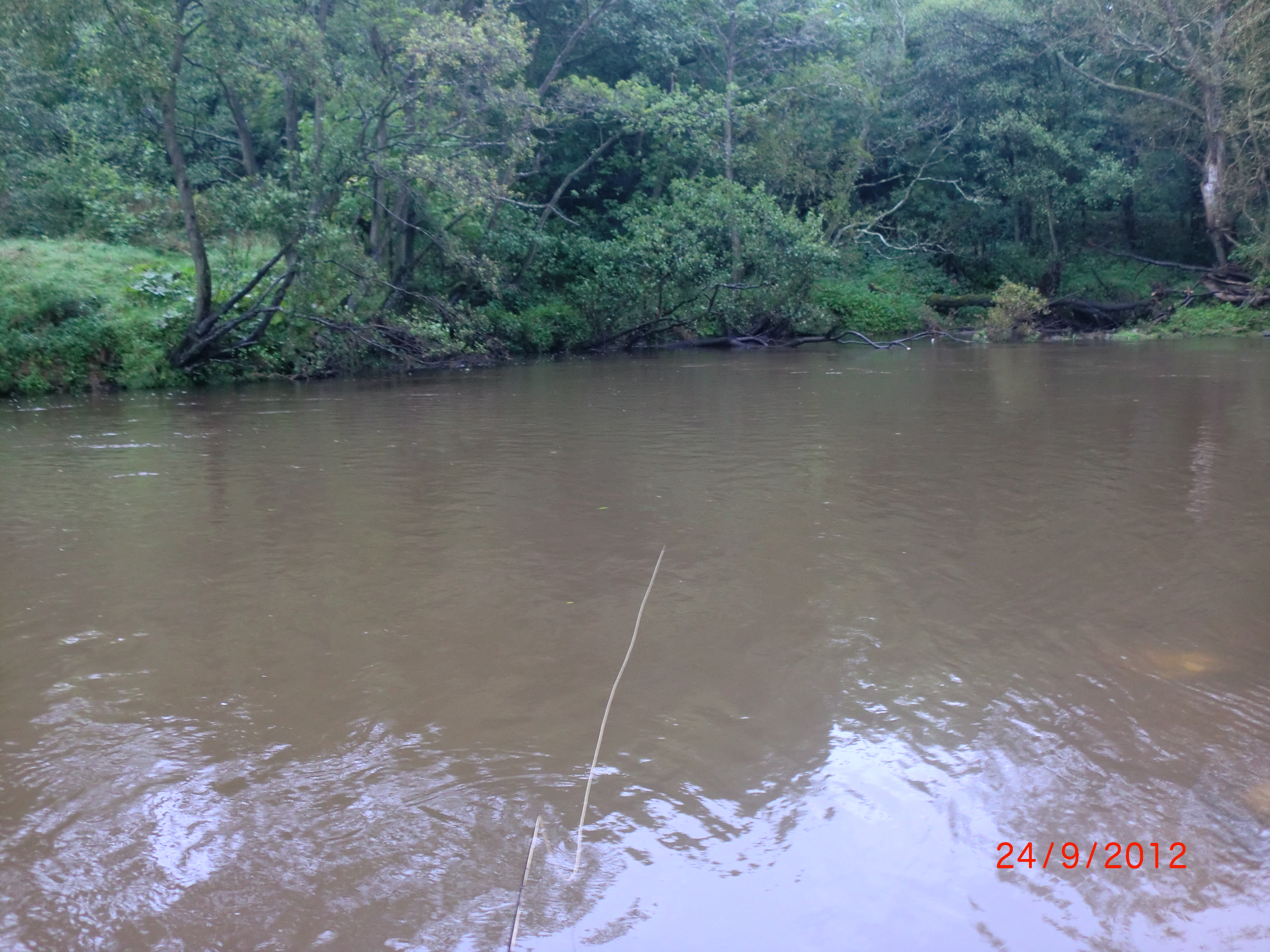
There was visibility in the margins and Peter suggested that a short leader and a couple of weighted nymphs might bring me what I (we) sought. And I did have a couple of pulls, but our thoughts revolved around the ”Oh dear!” , and mine around, “Oh well, I could always come back up, next season”
The consensus was that we should drive farther North, and we did.
September 2012 – the Till
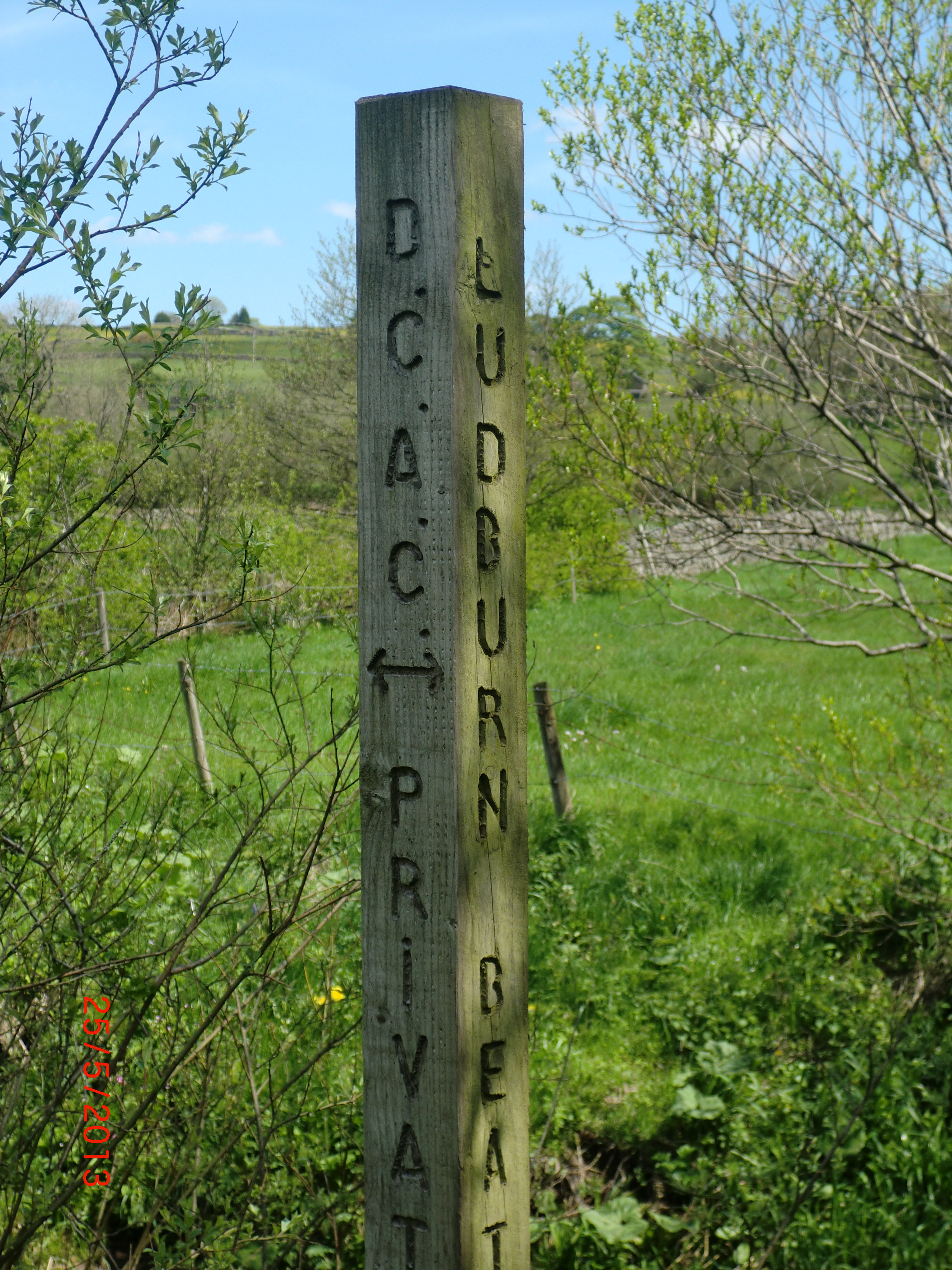
The riparian owner of the Till near Wooler, not so many miles from the Scottish border, is Duncan Davidson, who leases his water to one of the oldest fishing clubs in the land, the Glendale Grayling Club, founded in 1838.
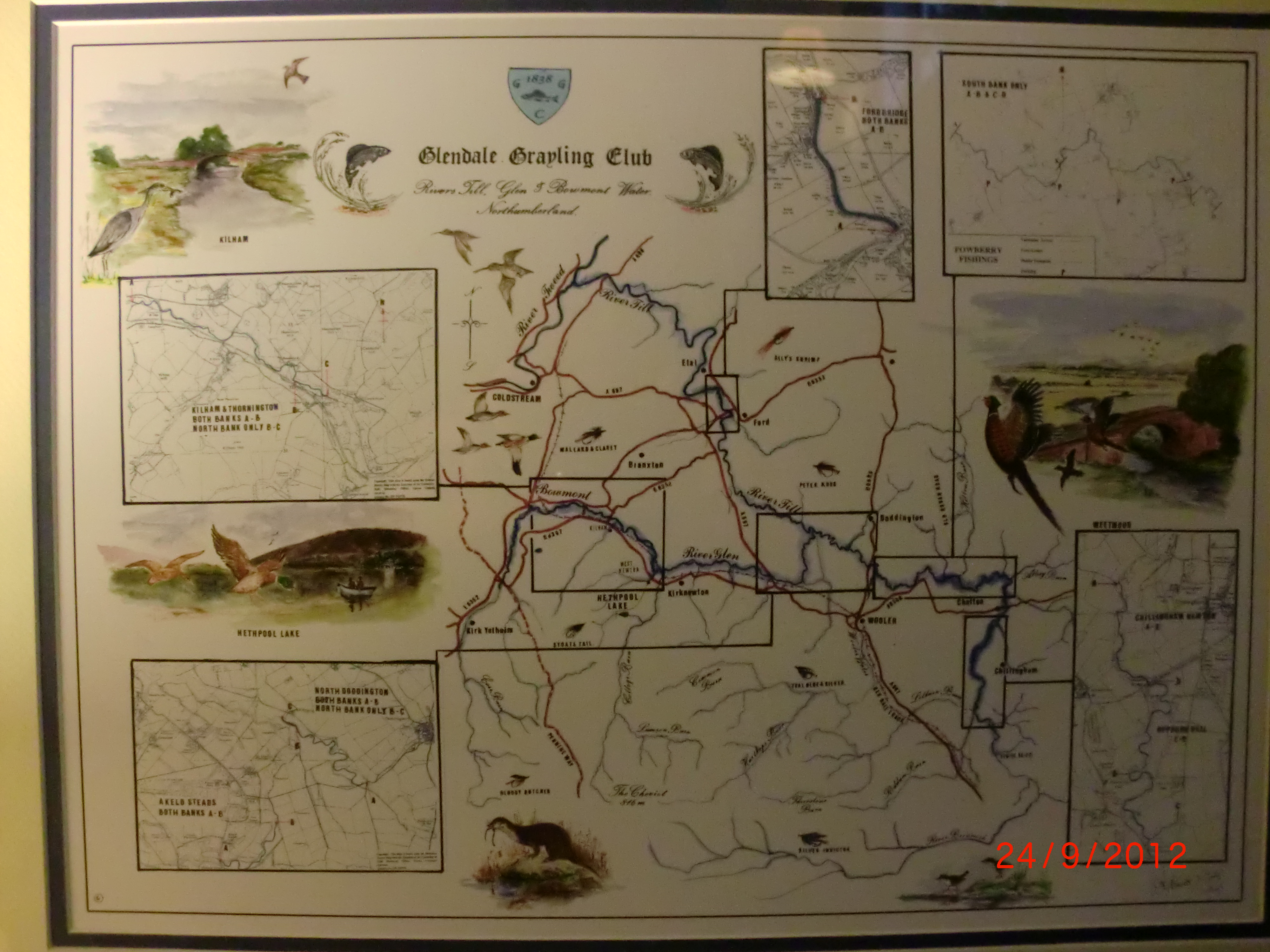
Geoff and Peter are two of its only 38 members….lucky me!
The Till is famous for its run of sea trout, which it is claimed can be caught as easily in daylight as after dusk, and also its salmon. It rises in Comb Fell and is the only tributary of the Tweed which flows wholly in England. In its upper reaches it is called the Breamish, and it joins the Tweed near Berwick. It flows through the most glorious craggy countryside which is softish on the eye because it is quite verdant, but in its isolation I suspect it can be challenging when winter winds blast, and rains shower horizontally.
In the rugged countryside of the Glendale beat near Chillingham,
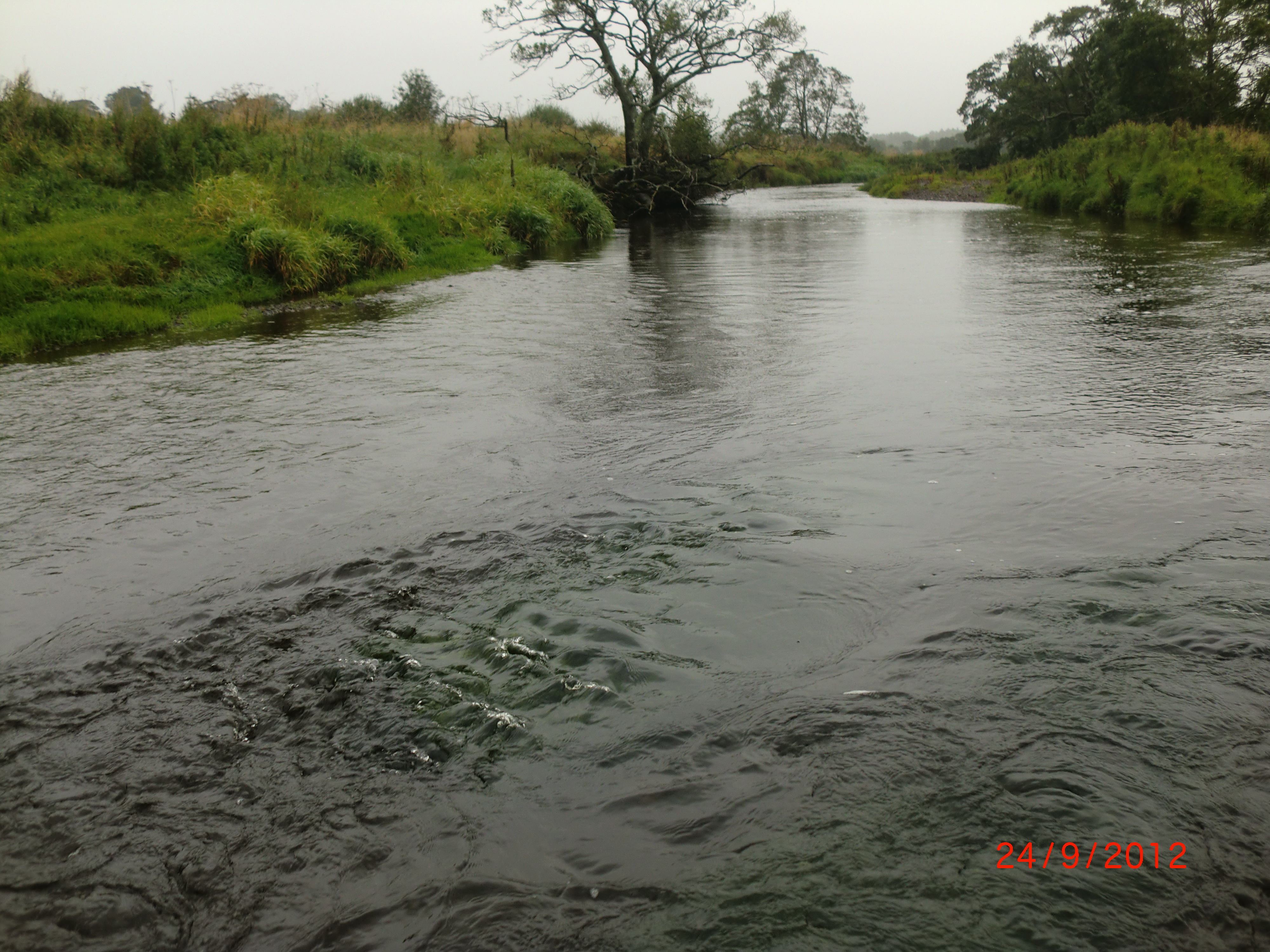
and at over 400 feet above sea level, the run off had still to colour the water, and a sense of optimism from my trusted Guides was motivating!
We walked the bank and Peter pointed out some likely lies,
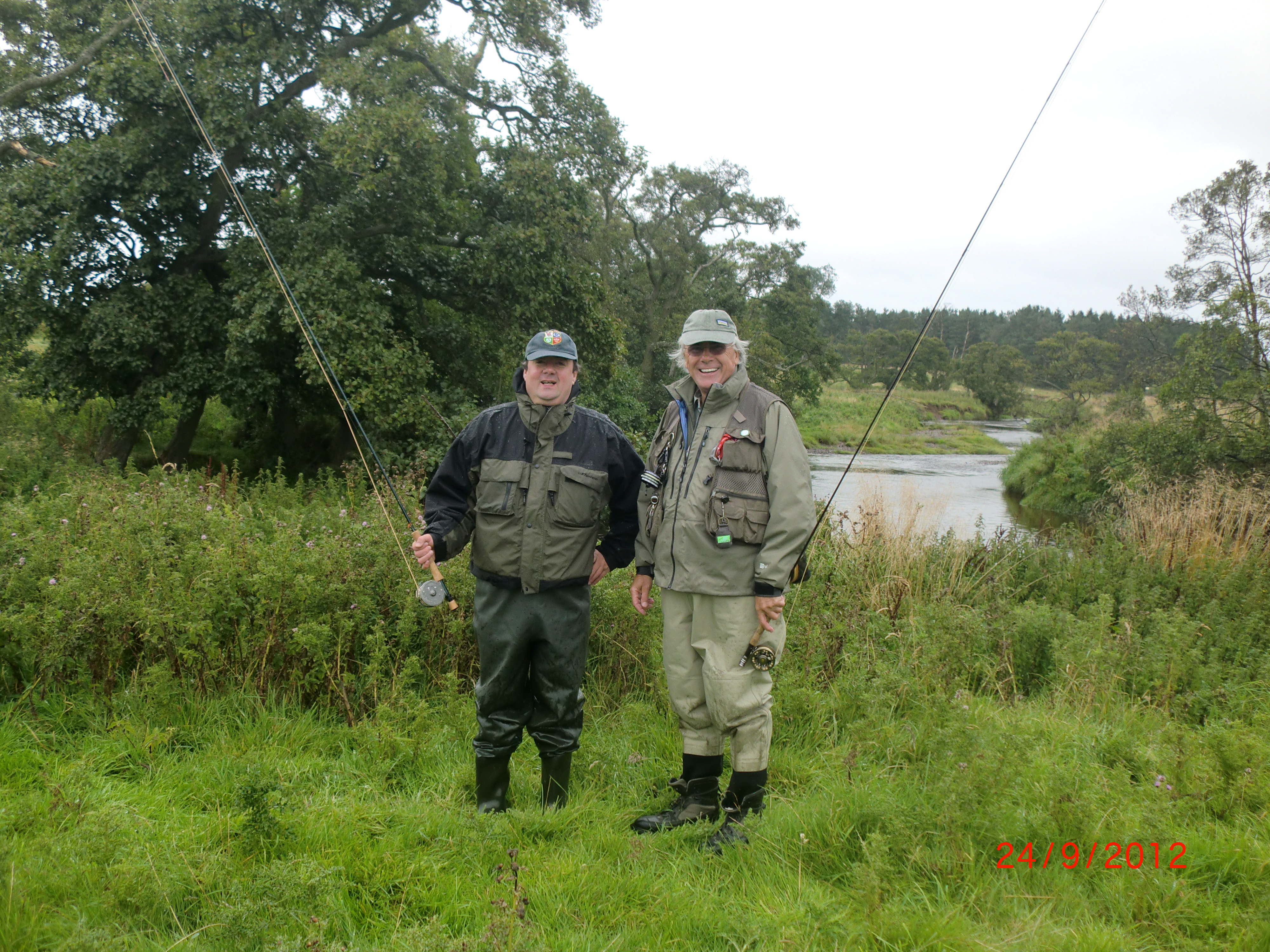
and gave some local tips, before leaving with Geoff to seek some sea run creatures.
And whilst it was, guess what, still raining, and not a little windy, I noted two fish rising under the branches of a sprawling alder, and it was off with the nymph rig, and on with my end of season favourite, an elk hair caddis. But they were not interested, or more to the point, in the blustery winds my sloppy casting probably put them down!
Peter joined me to check on progress by his Till protégé, and we both saw some movement under another alder

…and after he slipped away, and with my rig now Skues-esque, my Northumberland trout was taken on a black spider fly on the dropper.

As were two more little monsters taken whilst feeding in the margins of a long

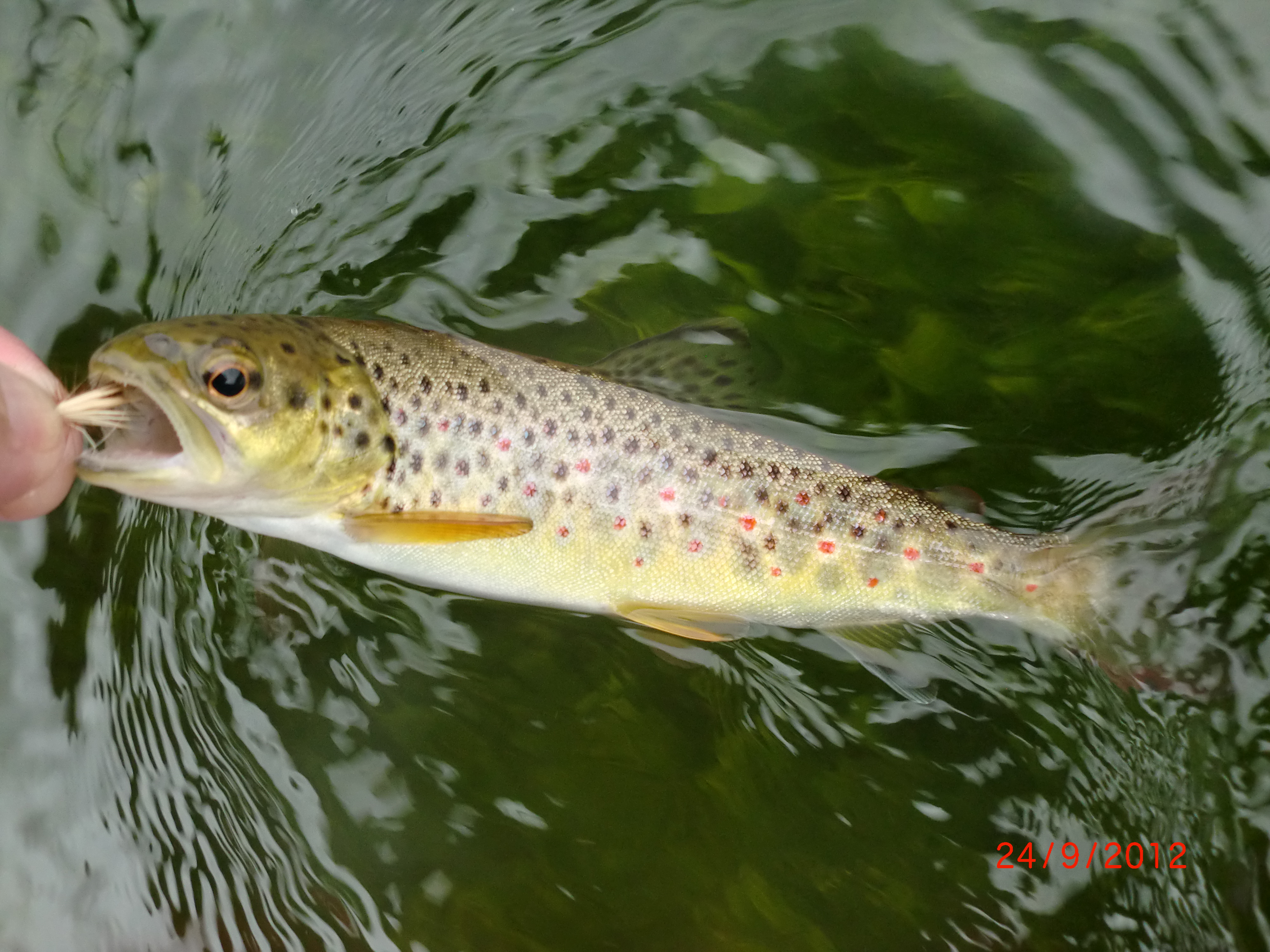
glide, but on the dry, on my faithful EHC and in the still falling rains, and only 9 degrees. Soaked but content, a picnic lunch followed, as we mused on what might have been in better weather. Geoff connected with a salmon, but fleetingly.
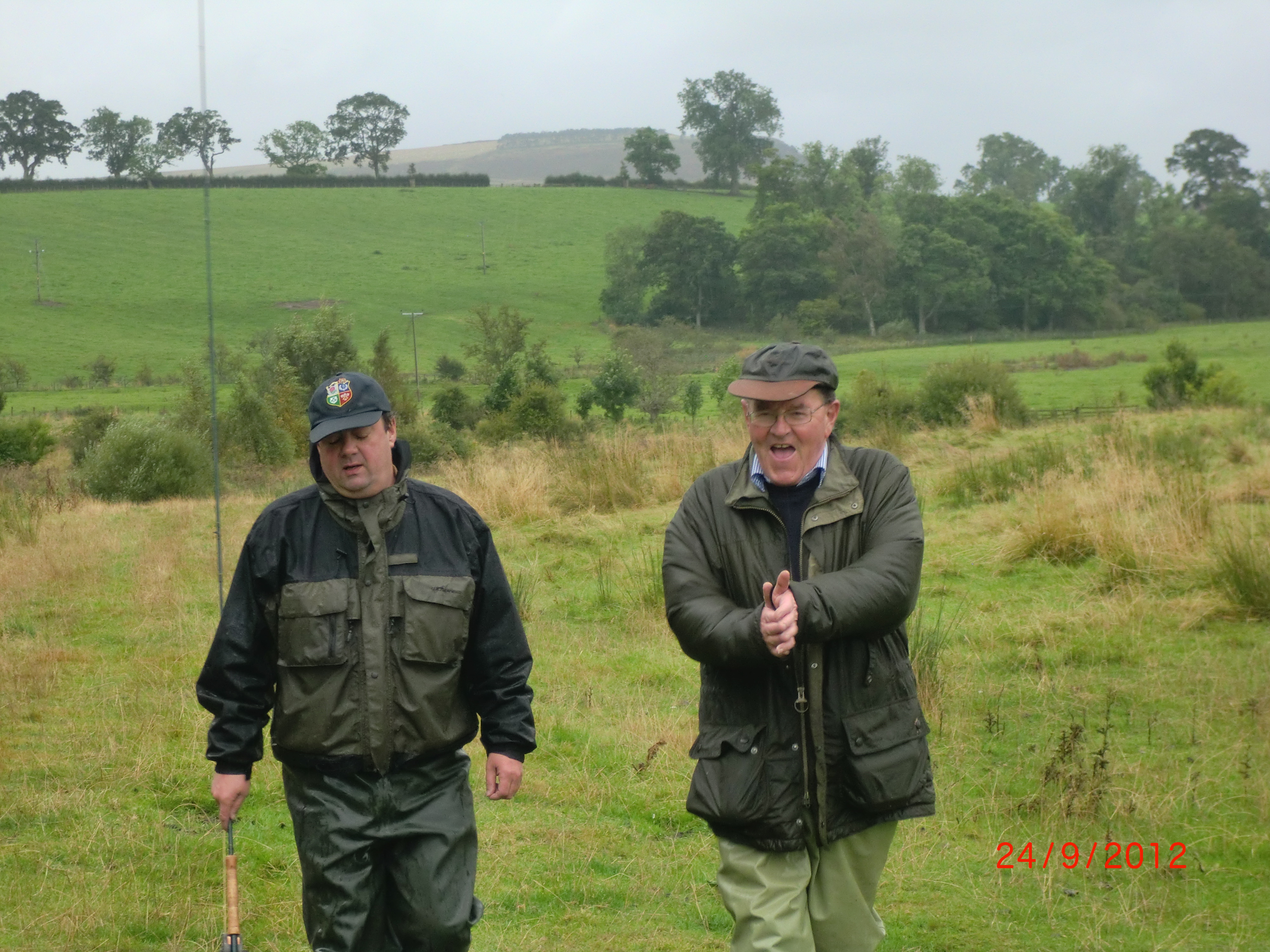
He describes his beloved County as the best playground in Britain. And who would argue? First class rugby, Premiership football, world class shooting, more game fishing than you could wish for. Beaches, the Cheviots and the northerly Pennines….cheers, Guys!
16 Sunday Sep 2012
Posted in Essex
Clive Gliddon, an official of the Billericay & District AC wrote to tell me that their section of the R Pant at Shalford had some trout in it which their, predominantly, coarse fishers would catch from time to time, when indulging in their paste and maggot, worm or bready, means to capture the specimens they seek from this exciting little fishery.
I tried, using the flyfishers’ tec hniques but could not match my Coarse Brethren, and in spite of several visits. I caught dace on the fly, and chub, too, but no ‘spotties’, or even rogue, escapee ‘bows.
OK…an admission…in a fit of intemperance (or maybe inventiveness!), I also made a visit last Winter, armed with a small spinning rod and a few Mepps to try to eke one out of the Mill Pool at Codham, but this produced only a solitary jack pike of 20″, who was quite surprised to meet me!
One final attempt this month produced another dace, and some fun, stalking chub, but I was not disappointed, because a ‘cunning plan’ had already been hatched with Rob Mungavon, and this was put to work, the very next day.
September 2012 – the upper Cam, or Granta
The Cam or Granta rises near the delightful Essex village of Newport. It flows in a tree lined corridor through gently rolling farmland and its banks are untended and natural with all that entails, until it reaches Audley End, where in sight of the glorious Jacobean House, it is impounded, and then released to flow through more open territory toward Cambridge. It is a short stream, filled with cool water from its aquifer, which is supplemented by spring waters whose numerous entries are evident by those little bank side distortions in their muddy slopes.
The water was low, very low.

Stealth was imperative and the littler fish in the real shallows could be seen skittling away, in water illuminated by the sunshine, and the bigger, too, and from yards behind, spooked, maybe, via vibrations from my heavy wading boots on the hard banks?
We walked out of the water on the sloping banks where possible (nb. stinging nettles, still do, in September!) and so as to avoid sending warning signals through rippling the flat pools. The alder roots

whilst seemingly offering footholds, were in reality floating, and a missed step meant an unexpected drop into deeper water where fish were hiding from potential predators (you don’t live too long if a small wild brown in a narrow, shallow stream, without some serious self preservation skills!)…so that pool was not worth casting into! And casting in this tightest of environments was an incredible test, and more so when the wind picked up. Moral(s) of this story…enjoy where you are; flies are cheap; leaders, more so; patience is truly, a virtue!! Also, I need to revisit my theory about rod length. Rob used a little five foot bamboo wand with real skill.
And he really knows his fishing, and his wild trout, and suggested that even the imperfect cast should be left to drift naturally, even if really slowly in the tedious flow of low water. For in September these fish know that the larder is emptying and it’s better to eat now, because Spring and new shrimp and juicy pupa are several months away! So they can be tempted,

and without too specific an offering, and mine, an olive CdC, proved tempting to two fish….one tiny,
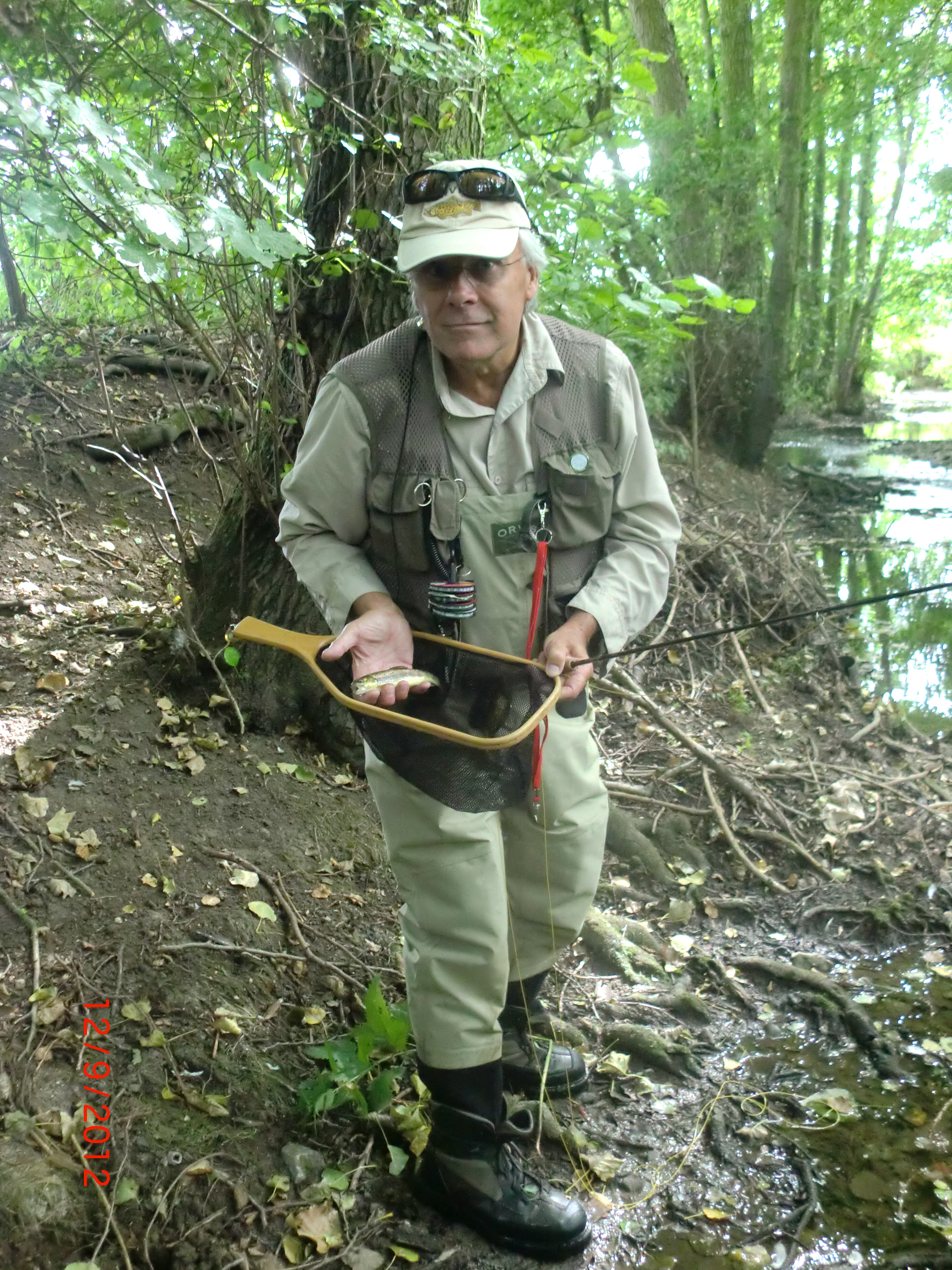
the other a beautiful monster of at least nine inches…all nine inches of beautiful wild Essex trout! Heaven !!
42 Counties ‘netted’ and just four to go.
10 Monday Sep 2012
Posted in Surrey
Surrey does not have many rivers, and has few trout streams!
You may know of the Mole (a notable coarse fishing river), the Wey (ditto, but stocked with browns in parts, and including by Peper Harrow FFC), but you may not have heard of the Cranleigh Water, nor also –
September 2012 – the Tillingbourne
This glorious little tributary of the Wey, rises near Coldharbour and flows gently through copse after wood after copse. It picks up water from another, tinier stream which rises in the delightfully named, Friday Street, and passes through idyllic villages with evocative names like Abinger Hammer,and Gomshall. Here it irrigates meadows of water cress, before gliding by the cricket ground where families picnic, and children paddle in its alluring shallows alongside the flocks of resident duck and migratory geese. Then onto Shere, where it is hidden, protected behind the fences of impressive country seats of its wealthy residents, before revealing itself once more as it meanders into the manicured delight, which is the village of Albury. (home for Peter Cockwill’s bountiful fishing shop!)
Albury is the Surrey estate of the Duke of Northumberland. His estate team ‘manages’ the Tillingbourne, and via diversions or by damming they have created three trout lakes for still water preferrers which are stocked with rainbows. Earlier stocking of parts of the river have produced a head of resident browns, and these and some stocked rainbows are in the river at Albury.
I fished the beat running from Vale End lake,

and here the river is very narrow, and rarely more than ten feet wide, and less when Summer grasses impede.
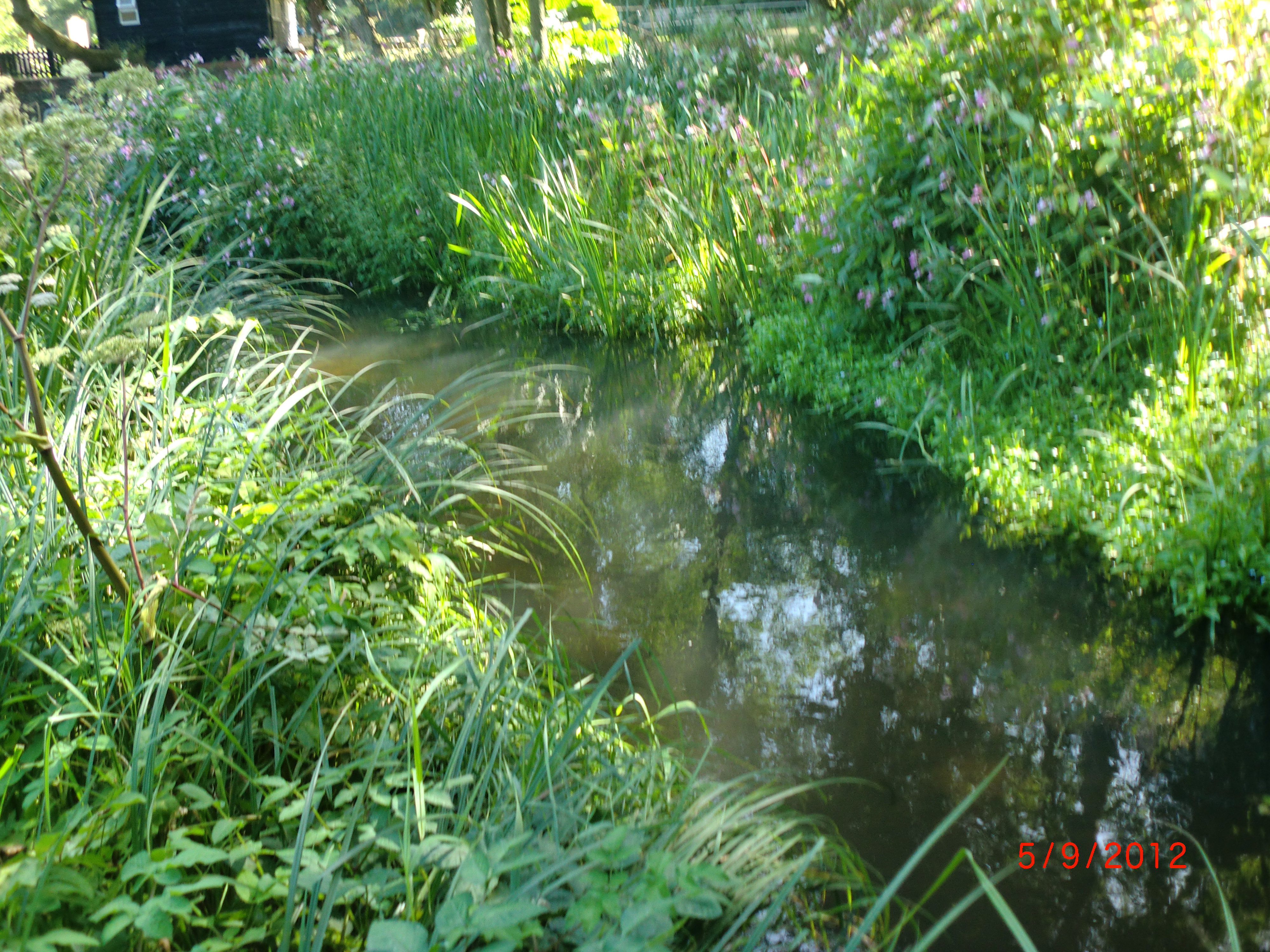
Tree lined, but with banks mowed in places to aid access, the many alders demand complete concentration when casting. The stream is shallow and flows over sand, and weed growth is sparse. The bends produce fish holding pockets, as do the holes below tactically positioned rocks and logs.

And in one of these I encountered my first fish, which sipped in my weighted PTN. When realising he was hooked he took off, and with only one escape route open, he rushed headlong past me downstream, and my light tackle could not hold him, and my leader snapped at the tippet knot. I forgot just how powerful and aggressive rainbows are when compared with their spotted friends, and my 4 weight outfit was inadequate. Another took a PTN from a hole below an alder, but he was lost, too.
The fishing offers the day ticket purchaser the opportunity to return if the number of fish one applies to take, are not. It is a very pretty fishery, and only 30 minutes from my home, so I will return!
02 Monday Jul 2012
Posted in Isle of Wight
Tags
Alex Cortet, caddis pupa, Caul Bourne, Dom Longley, Environment Agency, Isle of Wight, Isle of Wight trout streams, Medina, Newbridge, Newton River, The 'Today' programme
Why are anglers so daft?
Last night the weather forecast said that rains would move from the South West and arrive and soak the South East by mid afternoon!
On the A3 at 7am, the ‘Today’ programme said the same, as I headed to Portsmouth.
Coming out of the Hindhead tunnel and with the South Downs in sight, or at least almost, as the cloud base was so low, I knew rain was already falling, and I wondered whether to turn around and head back to London, but I reasoned, I would catch up with the commuter traffic and this would make that option rather tedious, and besides, I was only twenty miles from a Wight Link ferry, and having made the effort why not continue? Even if by now it was tipping down!
But clearing the Downs and with Langstone Harbour, now in view it was dry….so that was a good decision!
£52 later and I was on board the 8am ferry to Ryde, and it started raining, and rather seriously…yet again the forecasters were wrong, as the rains arrived early.
It was to the Medina at Newport I drove, to check out what the EA’s Dom Longley had suggested as an opportunity. Walking wader jacketted, my top half was protected from the rains, but not my light weight walking trousers, but they dry quickly, and whilst noting this tiny stream might deliver what I sought, I was already too wet to bother fishing, so set off in a south westerly direction, and toward Shalfleet, in hope that Dom’s primary thought might deliver!
July 2012 – the Caul Bourne (aka Newton River)
The Caul Bourne is a tiny ‘river’ but considered to be one of the Isle’s main waterways, and it flows for just 8 kms from Calbourne to its estuary at Newtown. It meanders, wood bordered, through farmland, and I sought out fishable bits, driving along single track roads close to Newbridge, until a road sign highlighted a weak bridge, and I encountered such bridge close to a mill, and stopped to peer into a shallow, pebble bottomed stream. Hhmm! Meandering streams create little outer bend pools, which might just…!
Rather wet yet again, I sloshed along a stony drive to enquire of the homeowner whether there were trout in his stream, and my arrival having been heralded by a duo of lovely Labradors, I was duly met by James, who whilst both amused and curious, generously allowed me on to his parents’ land to have a go, and bid me ‘good luck’!
The Caul Bourne is three feet wide, and whilst downstream nymphing in tight surroundings is poor technique, I sensed few other options, but there was just a tinge of colour n the water to afford me some camouflage.My first catapulted cast (courtesy of Alex Cortet’ tuition) snagged,
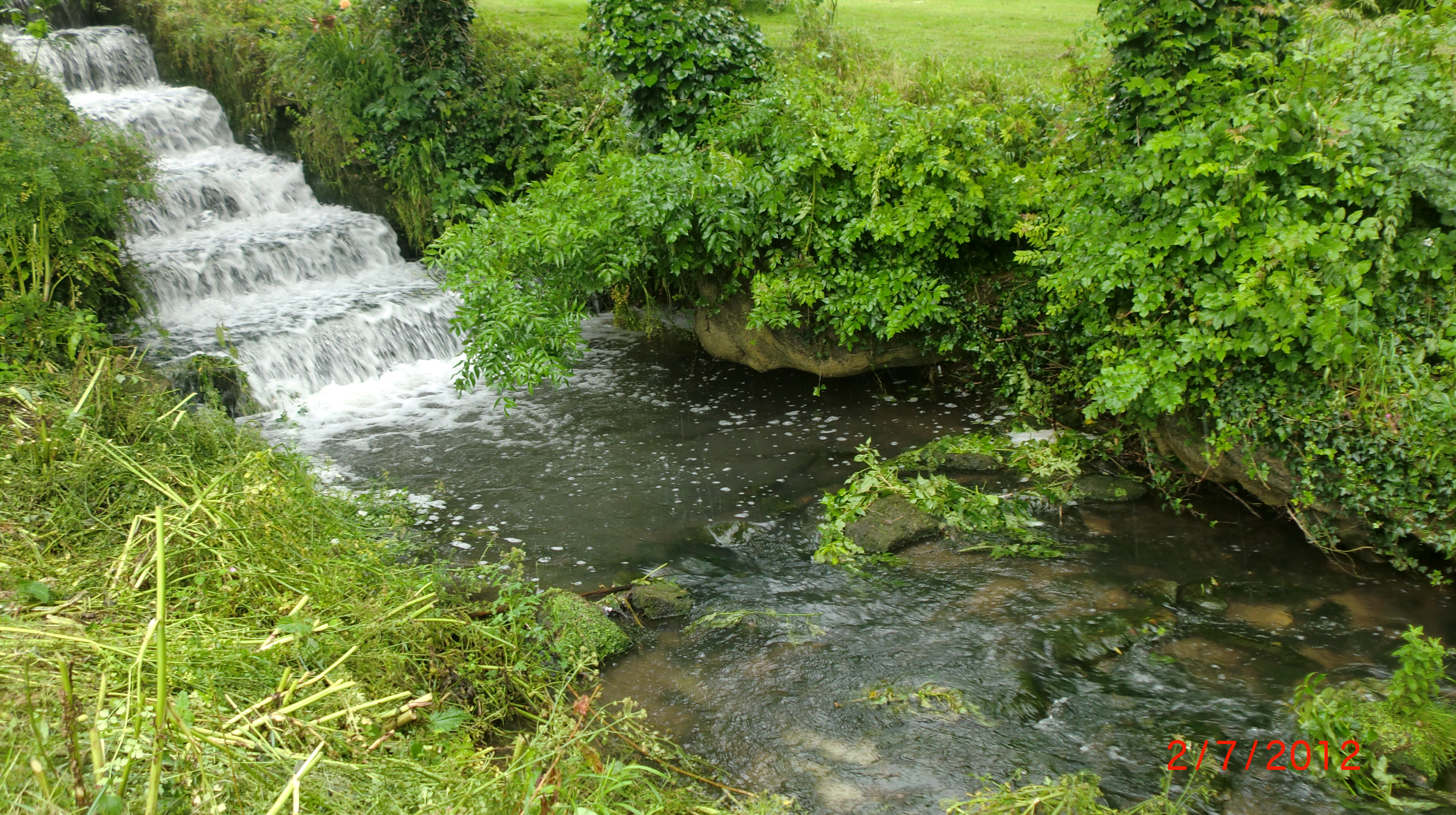
but …keep going! This was warfare…sneaking double-upped and under dripping weighted branches, flicking here, flicking there….
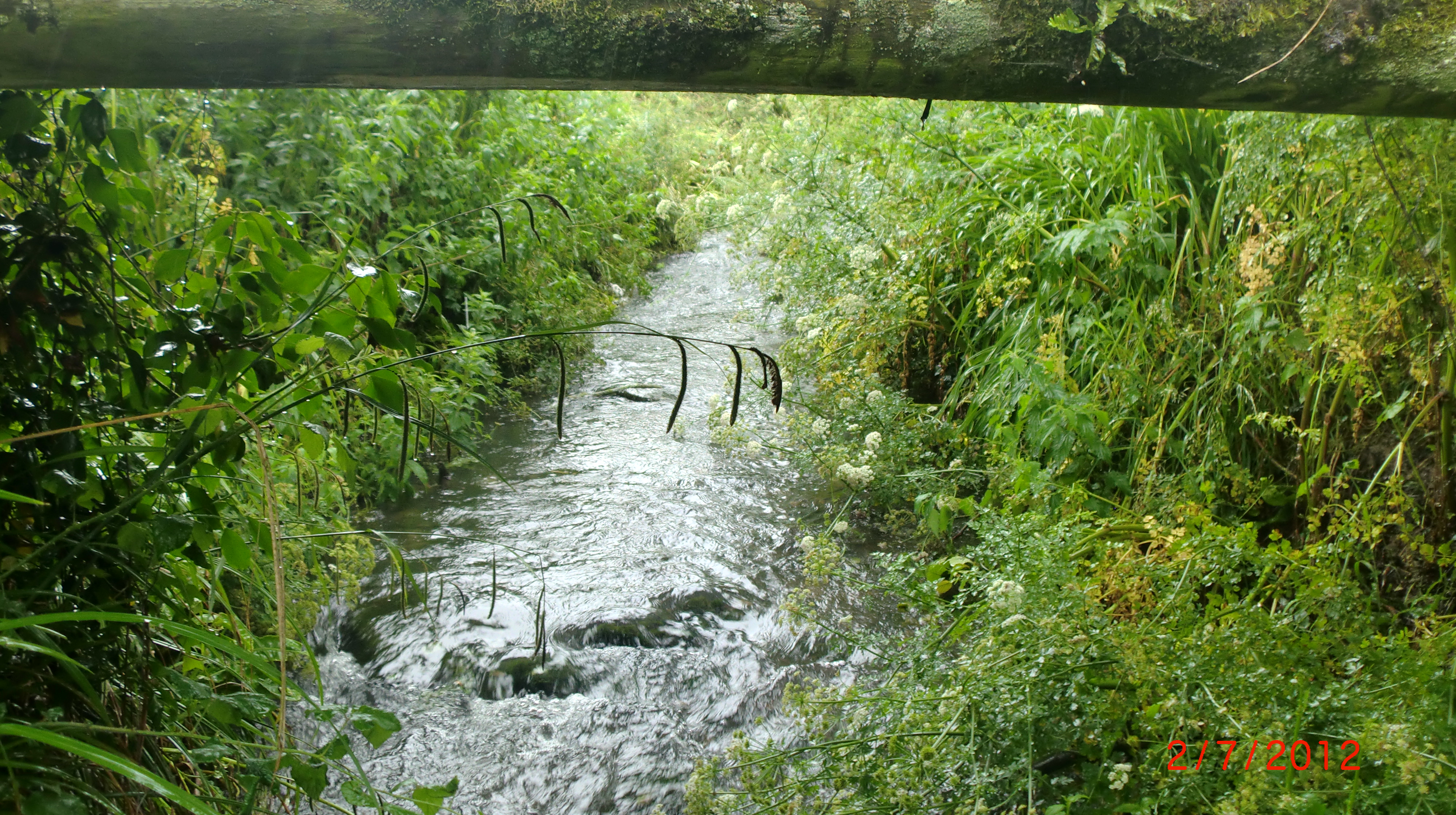
I thought I saw the splash of a moving fish, but it might have been a bigger rain drop. Either way, it motivated!
And then, a deeper pool, perhaps three feet or so…but no takes.
And then another bend, and another pool, but still nothing.
And then another, and what was that?

…a pull, another pull, it’s a fish, but what is it? James had said that any fish were scarce in his beat, so when this one was close to the surface and I saw a spotted yellow flank, I was ecstatic. The outer edge of the pool was lined by filamentous roots, and I knew that taking him would require luck, and so carefully, and slowly I edged him closer, and after a few lunges, brought an twelve inch fish to hand. And I was lucky. I had a bead headed #18 PTN on the point, and he had taken the #18 yellow caddis pupa on the dropper, so how the weighted nymph had not snared, I know not.
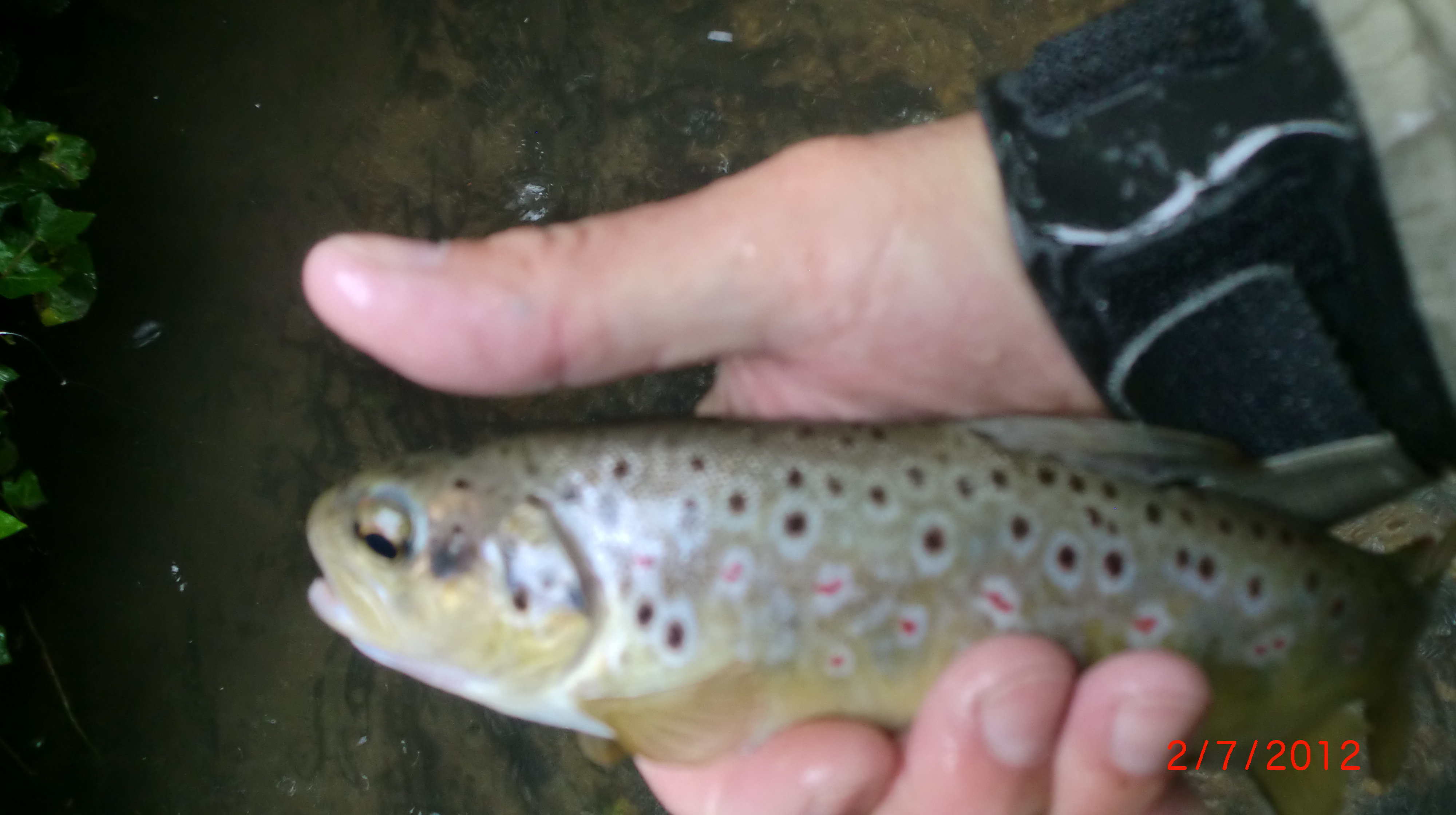
Perhaps this was my reward for the daftness with which I had set out at 630am this morning ! I did not need another fish, and after only thirty minutes, or so, I returned to Tonka, extremely happy. I was wet through and did not notice, but stopped by to thank, young James, and share this picture.
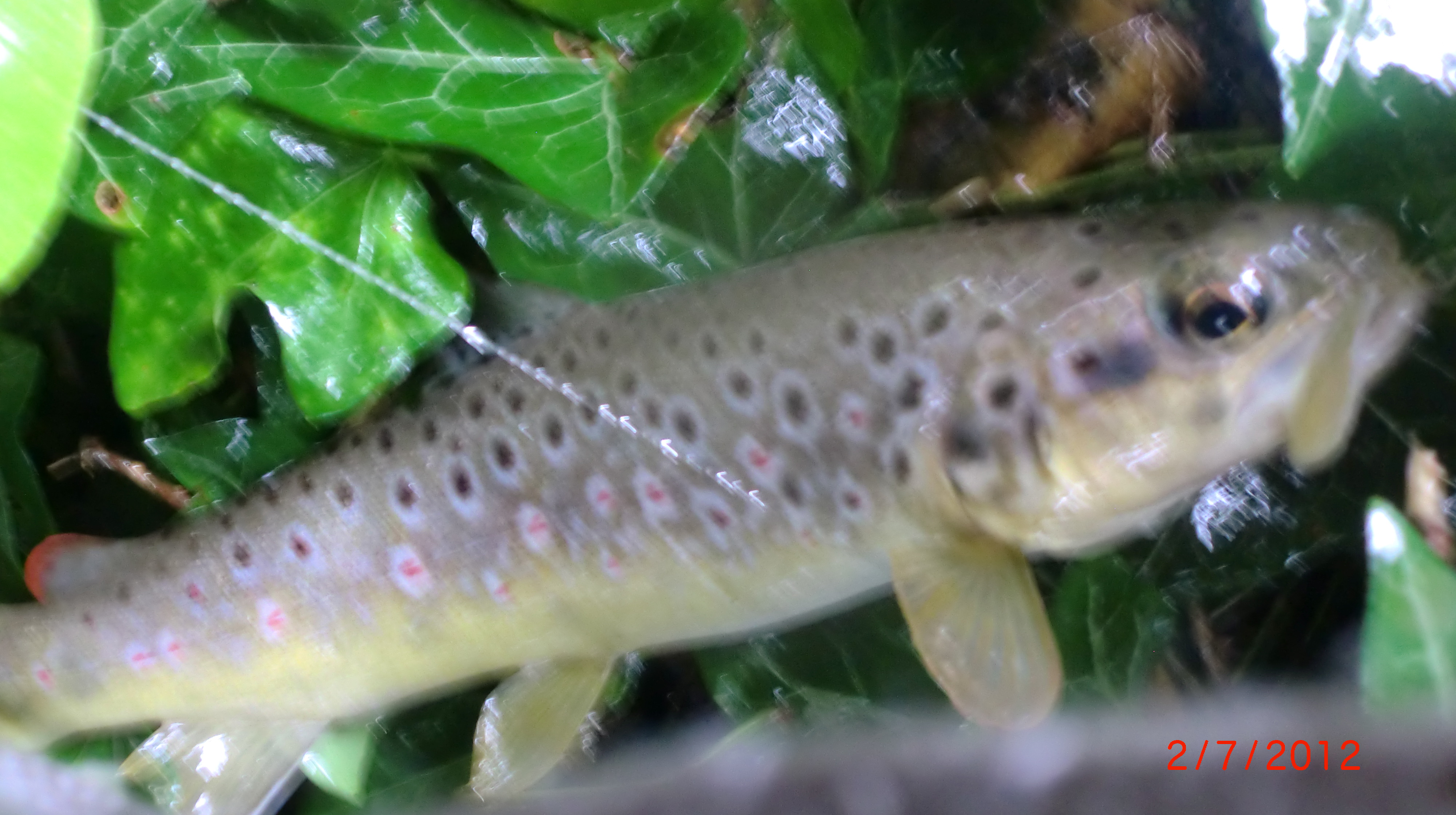 I thought that the Isle of Wight was always going to be difficult, but thanks to guidance from Dom Longley, my lovely fish means that I am 41 down, and now have, just five counties to go.
01 Sunday Jul 2012
Posted in Merseyside
Tags
EA, Gareth Pedley, Kevin Nash, Malcolm Greenhalgh, Paul Gaskell, Tim Jacklin, Trout streams in Merseyside, WTT
The County of Merseyside has no streams containing trout.
This is the view of no lesser an authority than Dr Malcolm Greenhalgh, and is based on research he conducted in preparation of a scientific paper, as noted in his response to my enquiry of him, which read –
“Dear Tony
First, Merseyside is not a real county but an administrative county! Parts of the County Palatines of Lancashire and Cheshire! But here goes:
There is an angling club, Wirral I think, that has some fishing in that area. There are no river trout in southwest Lancashire = North Merseyside; and Wirral (South Merseyside) may well be the same. In 2004 I produced an account ‘The freshwater fishes of Lancashire, Merseyside and Cheshire’ for the Lancashire & Cheshire Fauna Society and sought help from many sources, with 0 for Merseyside
The problem is that that is known as Merseyside is low, with lots of urban connurbation. Rural areas in the northern bit is mostly low lying acid peat farmland (= mossland in S Lancashire) and with very few streams. The largest, the Alt, is clean in places, but not trout water.
On Wirral there are even fewer streams, none with trout.
Note, however, that sea trout are now running the Mersey, though they are not catchable in the river here or the Ship Canal!
Sorry!
Malcolm G”
Malcolm Greenhalgh is both a naturalist and a fly fisherman. After reading biological sciences and researching estuary ecology for his PhD, he lectured for sixteen years before becoming a freelance writer on his fortieth birthday, and anglers will be aware of his prowess, and expertise from his many interesting and challenging articles in the angling press.
His view is supported by Tim Jacklin and Paul Gaskell of the WTT, and by Kevin Nash and Gareth Pedley of the EA…., as well as the officials of the many Angling Clubs in Merseyside with whom I have exchanged correspondence.
So…maybe my ‘Mission’ will not succeed, but this sad news is no reason to stop searching.
I could make angling history if…
05 Tuesday Jun 2012
Posted in Tyne & Wear
Tags
Axwell Park & Derwent Valley AA, Beamish Park Hotel, FishPal, Geoff Hodgson, Kevin Dick, Rowlands Gill, Tyne & Wear trout streams, Tyne Angling Passport, Tyne Rivers Trust
The Tyne Angling Passport was an early source of hope for capturing the three North Eastern counties. Cleveland having lost its singular identity at the end of the last Millennium, I was convinced that Northumbria, Tyne & Wear, and County Durham were all mine for the having, and this was confirmed by Geoff H.
A wedding invitation to Sue and I from oldest friend ‘Pakers’, whose daughter Tania, was to be married at Hexham Abbey in March, got me into frenzied search mode, and excitement was at bursting point when reading the Tyne Rivers Trust site, revealed that the season opens in the region on March 22nd! I had already fished opening day on the Usk on the 3rd, and here was another opportunity to wet a line before my traditional start on the 1st of April.
In the event the Tyne Angling Passport vouchers did not arrive before my planned departure, but FishPal also arranges days up there, so for a modest £8, I was armed with confirmatory emails and off, in sunny times to the Axwell Park & Derwent Valley AA water downstream of Rowlands Gill. And note the precision with which I have described the venue, because upstream of here, and you’re in Co Durham!…and I was on –
March 2012- the Derwent
The bottom of the beat is close to Damhead, near Axwell Park, and is also known as Lady Steps or Derwenthaugh Dam. I was fascinated to watch a construction crew rebuilding the dam, and incorporating a salmon ladder to it…a welcoming signal.
I went walking the beat, past Swalwell Juniors Football ground, where the river is deeper, and trout lies, sparse. Eelhaugh (or Pylon Field) contains very fishy water, but March was unseasonably warm, and no one mentioned this to the fly life, nor to the fish, which are apparently in abundance on this tributary of the mighty Tyne. And after the driest early year for many, the water levels were very low,
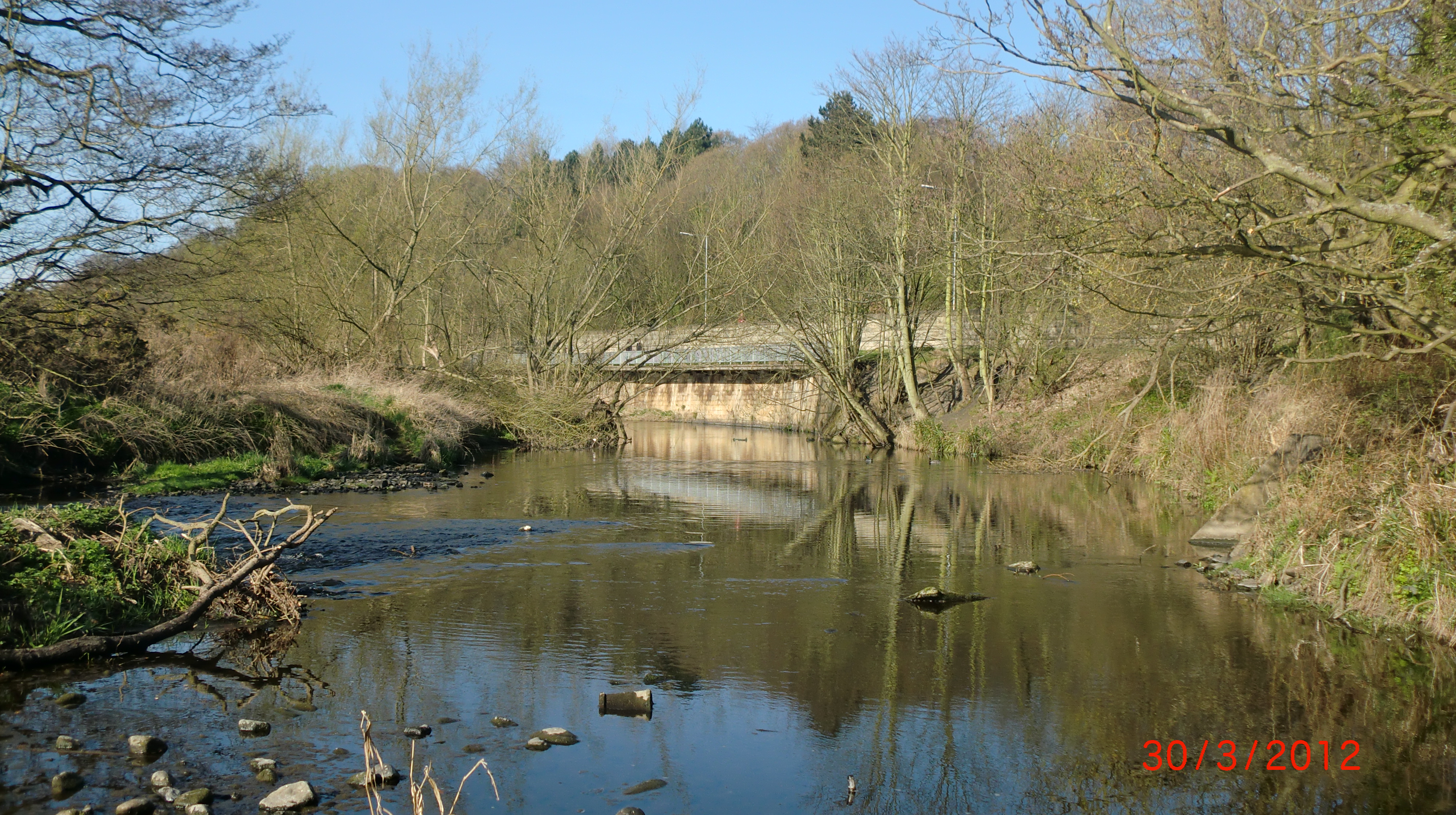

so along with brightness, heat, and an eager population of cyclists, dog walkers, joggers, and families, there was not a sign of a fish!
To the top end of the Tyne & Wear stretch by the Gibside Estate,

and a few fish were moving, but in such shallow water, more stealth than I could muster was needed to get close enough to them to cast some temptation their way. I decided to try the middle of the beat, and wandered from high in the woods, past carved tree trunks showing the variety of wildlife on the hillside, down to Clockburn Bridge, and began another trundle upstream, diving down into the water from time to time, where I thought there might be a chance. But to no avail…but, sensing that a return would be necessary, this exercise gave me a valuable insight into the whole fishery, and I mentally logged where I might have success later in the year. I finished up above the Nine Arches,
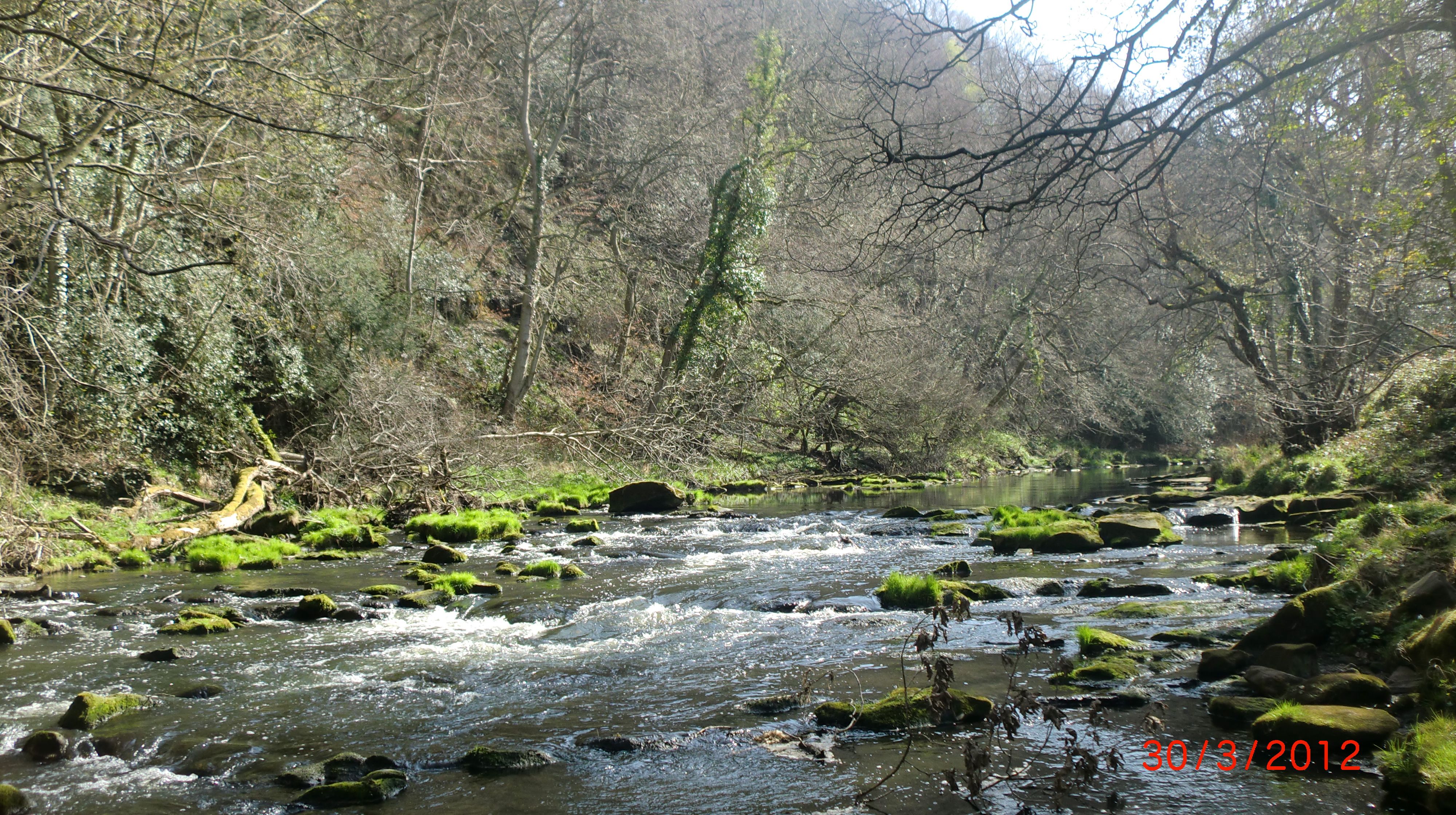
and for the first time saw feeding fish. But they remained doing so, and on naturals, not my artificials!
May 2012 – the (same) Derwent
To test my theory about lies, I wrote to the Chairman of APDVAA, and Kevin replied with a charming note –
“Hello Tony,
…and apologies for not replying sooner. I’ve had a quick look at your blog. Wow. You certainly get around.
The Derwent is fishing very well at the moment. Quite frankly I’d be quite happy on any of our stretches at this time of year. The water upstream of Nine Arches, up through the meadows has recently been stocked and, as always, has a good stock of wild fish as well. Another good stretch is the bit upstream from Clockburn footbridge (parking at Winlaton Mill ), crossing onto the south side at the next footbridge and carrying on upstream to the boundary. Mid afternoon through to the evenings seem to be the best period at the moment. As for tactics – anything you enjoy will probably work. I’m a big fan of things like elk hair caddis and poly wing duns at this time of year.
http://www.apdvaa.co.uk/good-flies/
http://www.apdvaa.co.uk/fishing-advice/
As you are travelling north I’m heading south (to North Devon ) on Fri 1st June for my annual holiday so unfortunately I’ll not be able to join you.. I hope you have a pleasant stay and the Derwent is kind to you. I’ve enclosed a recent photo of our secretary with a fish he’d caught over the weekend to whet your appetite.
Regards
Kevin Dick
Chairman APDVAA”
….so this was most encouraging.
After the morning wetness high in the Pennines,the weather nearer the coast was better and I was excited by the prospect of some early evening mays, and perhaps some spents, too, and indeed,on arrival, I saw a few mays coming off….before the rain caught up with me! By this time I was in the stretch below Thornley Woods which I had liked in March, and between showers had noted some fish moving below the overhanging trees, where to distinguish between fish coming up, and plopping rain drops was difficult.

But an elk hair caddis did the trick for this first fish,

and a second, just a few casts later, and then the respite I had hoped for, was overcome by the heaviest downpours, and I retired gratefully …to a delicious dinner at the Beamish Park Hotel, nearby.
The APDVAA water is 4.5 miles long and is varied and interesting. Its website is colourful and informative, and when ‘up North’ this river makes for a great day’s fishing, and is somewhere I would like to fish again. Its beats are #’s 17, 18 and 19 on the Tyne Angling Passport programme, and requires two vouchers, per beat.
Well, just two counties in one day, Geoff, and I accept your kind invitation to fish Northumberland together in September, when he has challenged me to capture a Tyne salmon, too….something to look forward to.
05 Tuesday Jun 2012
Posted in County Durham
Tags
Barnard Castle, Co Durham trout steams, Daran S, Fly Fishing Forums, Forest-in-Teesdale, Geoff Hodgson, Greys, High Force Hotel, Loomis, Middleton-in-Teesdale, North Pennines, Raby Estate, Widdy Bank Farm
When I asked Geoff Hodgson to help me in my quest to capture the three North East counties, he declared – “ we could do that in a day!” Geographically, he is probably right, but in reality….!?
In searching for somewhere interesting to try to net Co Durham, and through Fly Fishing Forum, I had an exchange with Daran S, who advised that –
“…the Tees is a magnificent river. At the source it is wonderful wild brown trout fishing. Rugged, boulder-strewn river in remote, isolated countryside. You can fish for £12 and not see another person all day. An 8oz fish is a scrapper and they will rise to dry flies all day long. Not easy fishing, but get it right and 30+ fish a day is not unheard of. Up there, the river is in County Durham.”
In a later email he offered this additional guidance –
“If it’s the upper reaches of the Tees you after, go to the gift shop next to the High Force Hotel. You can buy day tickets for (I think) £12. Ask for a map and the code for the gate to Widdybank Farm.
Drive up the valley and turn left just at the Langden Beck hotel and follow the road. You’ll see the gate down to the farm on your left (there are signs showing Teesdale Wildlife by the gate). Follow the track down to the farm and park. You then have miles of the most unspoilt wild brown trout fishing in the country. Fish anywhere. There are plenty of fish behind and in front of every rock. I usually fish dries as they will rise to almost anything. Something bushy and black is a good place to start. You’ll miss loads of takes as they are lightning fast. If you think you’re missing too many, change down a size. If they aren’t taking dries, try a small beaded nymph, fished Duo style. I like an orange bead for the peaty, stained water.
One warning. The weather can change very quickly so be prepared. A gentle breeze further down the valley can mean a bit of a gale in the upper reaches. I usually use a fairly short rod and fish very close. You can actually fish from the bank if you don’t want to wade. The river is full of ankle-breaking rocks and in places can be a bit hard to wade in.
Just keep moving. One or two casts into each run and then move on. A good day will see you take 30+ fish………”
I was intrigued, and was bound to follow his advice and head to the upper reaches of his stream.
May 2012 – the Tees
The A1 is endless, but more interesting than the M1. The A66 is much more interesting than both, as it heads towards the Pennines, but get onto the B 6277 as it leaves Barnard Castle, and you get into serious ‘shock and awe’ territory, where the views of the North Pennines are simply glorious, and stretch out, horizon to horizon.

This year, after a warm March and wet April, when everything went onto hold, plant life eventually came to terms with the volatile weather, and the result which I saw was a green and luxurious vista which was welcoming and almost soft and gentle, but I bet at times it looks raw and unforgiving, and especially when the sleet is driving laterally across the windscreen, and it is cold, and “did I remember to put a shovel in the boot?”
The drive through Middleton-in-Teesdale is punctuated by the sight of many white washed buildings which I later learn are all owned by the Lord Barnard, whose family has lived in Raby Castle since 1626, and is still considered to be one of the finest medieval castles in the country. The drive to my overnight destination at the High Force Hotel, at Forest-in- Middleton
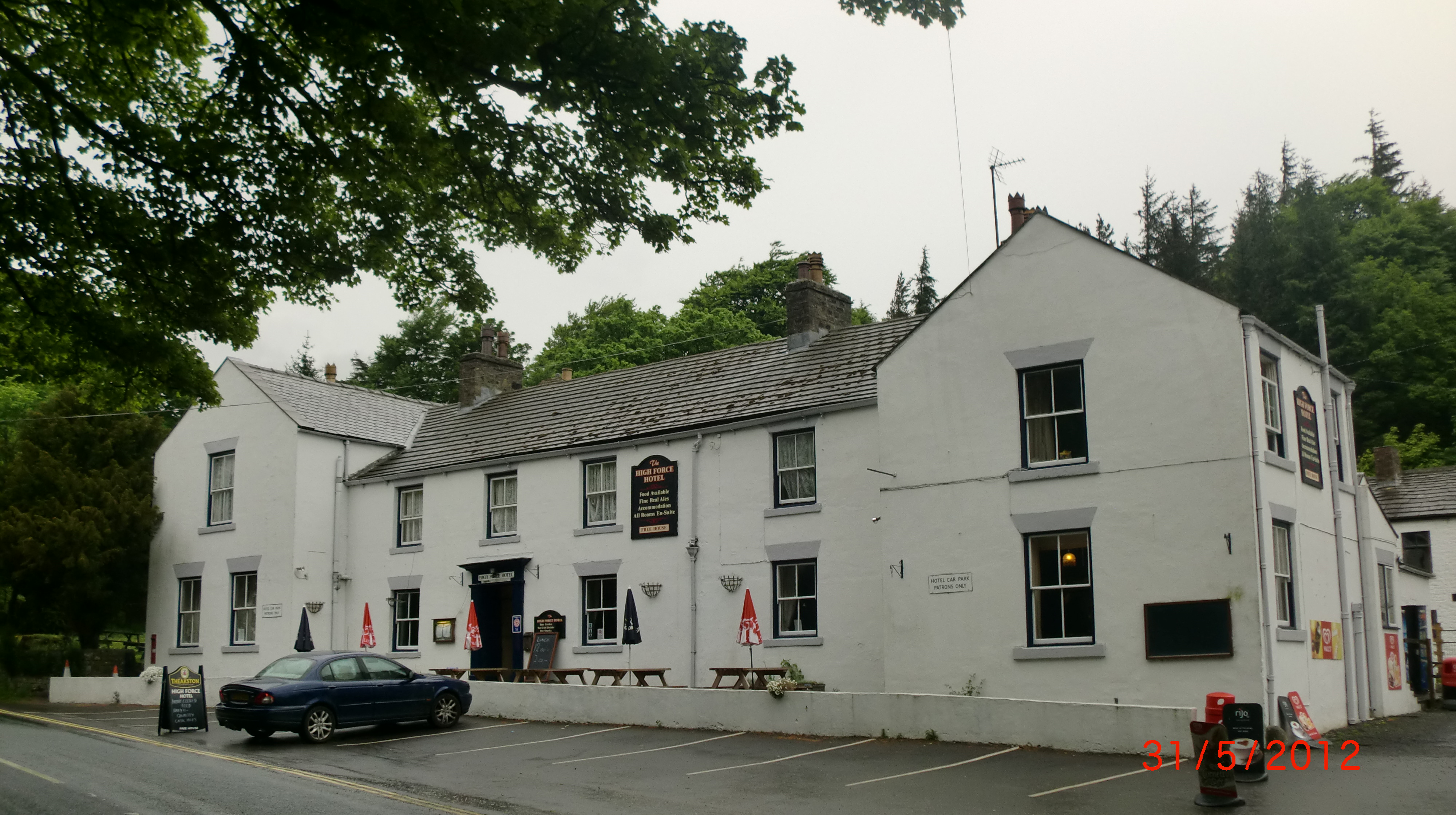
takes me to an elevation of some 1000 feet above sea level, and the welcome from Mike and Vicki is genuine. Actually, this early in the season, I am their own guests, so they really are pleased to see me!
I cannot wait for the next morning, and to try to ’net’ County Durham, and so waking early, I jumped into Tonka, and used Daran’s instructions to find where he feels I should fish. The rains then are what I would call ‘mizzle’ but hardening to serious rain, but it is a long way off the beaten track, and I am here, so will bear whatever Nature has in mind for the day, and in fairness, the forecasters have been advising that what I see is quite what I should expect. The Tees is fed by the Cow Green Reservoir, and I figure that means, that so high up its length, the flow is constant and under influenced by the run off that downstream stretches will be coloured by.
The north bank waters are part of the Upper Teesdale Estate, and I had to drive back to Middleton to buy a day ticket from the Raby Estate office, and then retraced my steps to whence I had been a couple of hours earlier, and off road, drove the mile to Widdy Bank Farm. It was raining, seriously, now!
The river, high in the Pennines, had an Iceland look to it,


and made me feel I was on a practice run for our next trip in early August! It is bleak up here, and the wind was blowing in showers of penetrating wetness, and I was pleased that just recently I had purchased a new Patagonia wading jacket. The river here is boulder strewn and the peaty water made it difficult to determine the depth, so I fished from the bank. That gave me problems because I had taken my Loomis, and punching a 4 weight line through the breeze was challenging, but after working the calmer water in between runs I hooked up, and soon landed a beautiful little wild brown,


and thereafter did not feel quite so wet and damp! I guess I must have walked a couple of miles searching through the runs and riffles, and no matter that no more fish came to net, I had captured County Durham, and decided to try downstream in lass bleak conditions.
And so, just a mile or three later I was near Bowlees. The river here, downstream of the famous High Force waterfalls is dramatic in its runs over monstrous rock formations,
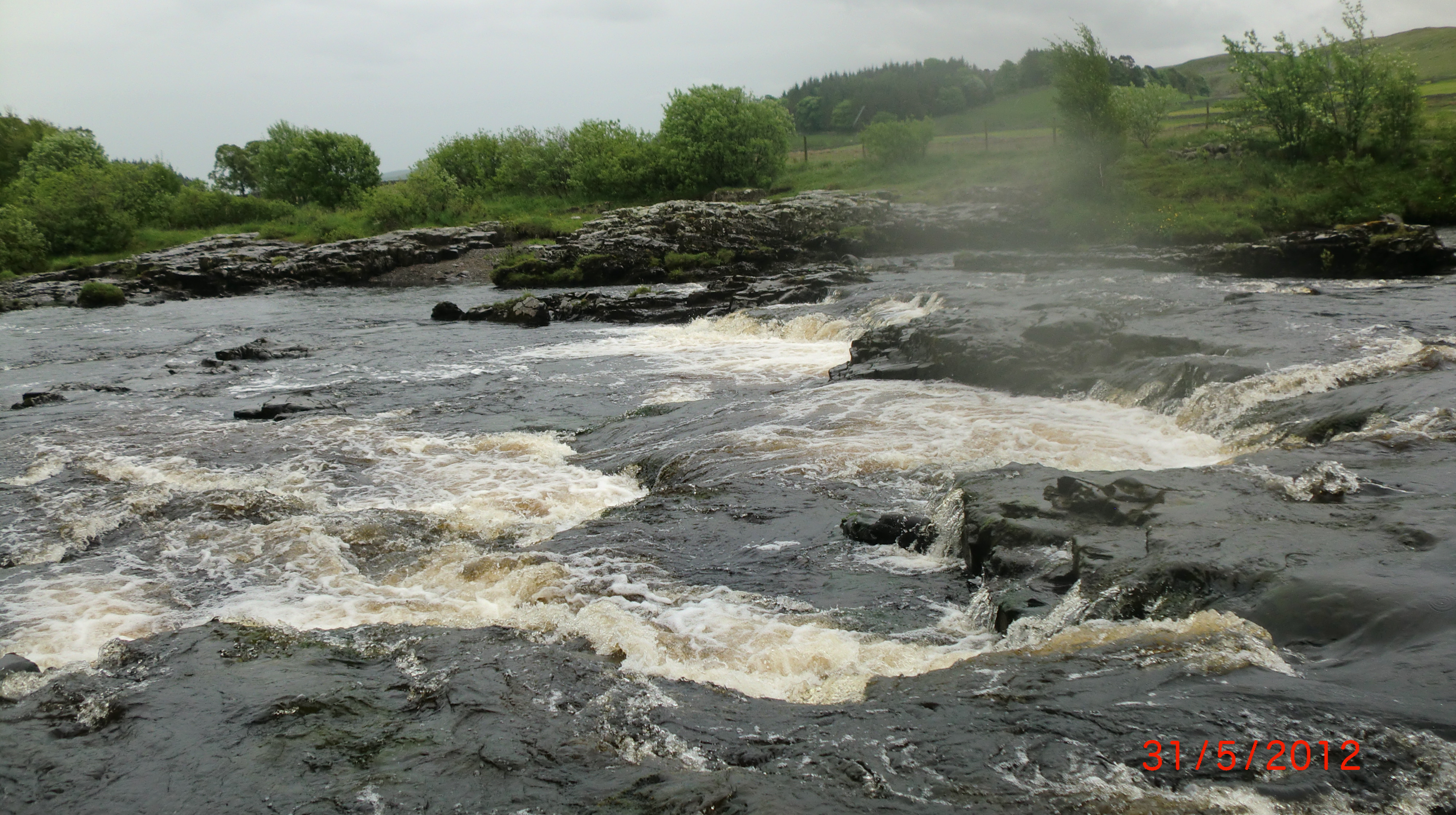
and into deep pools, along pebbly glides, and between tiny wild flower covered islands. So beautiful…but such difficult wading. I have rarely encountered such slippery stones, even more than the Usk’swhen the algae is in full growth, and that’s saying something. Fishing now with a five weightline and longer rod (Greys 8’ 3”), I was able to cast a fair way and cover a lot of water, and along came my second CD fish, of deep butter flanks, and this one nearly one lb.

I had hoped that I would be fishing dry, but in the wet and windy conditions, I never saw a rise so Skues won, and a PTN was the taking fly.
And then I got to wonder about Geoff’s assertion, and thought, “well if I head off to Rowlands Gill, now (it was one-ish) then potentially I have two bites of the cherry, if there is nothing rising, tonight!”….so did!
I loved the setting of this wild part of our country…a ramblers’ paradise, but be prepared. I can see how conditions could turn nasty, and the hills are remote and isolated. The towns and villages are attractive, and the people are most welcoming, for they know that only the committed make the long trek to be there, and they need visitors. A poor summer makes it a long winter for those dependent on this trade.
 Who's Counting?.............. A Fisherman's Journey